
Japandi Bedroom Decor: A Calm, Clutter-Free Guide (2026)
Japandi is two design traditions politely arguing in one room. Here's a single repeatable test for balancing Japanese restraint against Scandinavian warmth, worked across four real bedroom axes.

Good japandi bedroom decor is really two rooms arguing politely in the same four walls. One voice is Japanese: strip it back, leave the floor bare, let a single object hold a wall. The other is Scandinavian: keep me warm, give me a soft chair, don't make this feel like a museum at 7am. We keep both voices in the room on every shoot, and the calm everyone wants from a Japandi bedroom only shows up when neither one wins outright. That tension is the whole craft, so this guide pulls it apart axis by axis instead of handing you a shopping list.
We work out of a small daylight studio, and we've styled enough of these bedrooms to name the move we keep making: The Pull-and-Soften Test. Every choice you put in the room either pulls it toward Japanese restraint or softens it toward Scandi warmth. A bedroom that only pulls reads cold and a little smug. One that only softens turns into a cozy pile with no spine. So before anything goes on a wall or a nightstand, we ask one question of it: is this pulling, or is this softening, and does the room need that here? Each section below is one axis where the two hands pull against each other, with a real piece as the place we landed.
Contents
Two Bloodlines, One Bedroom
Japandi gets sold as a single look, which is why so many bedrooms labelled "Japandi" end up flat. It isn't one style. It's a graft of two that grew up on opposite sides of the planet and happen to agree on a short list of things: natural materials, low furniture, a quiet palette, and a deep suspicion of clutter. Past that short list, they disagree, and the disagreements are where the room gets interesting.
The Japanese line, the one that gives us Ma (the active use of empty space), wants the eye to rest. It treats an empty stretch of wall as a finished object, not a job left undone. The Scandinavian line wants hygge: texture you can sink into, a warm pool of light, the sense that the room likes you back. Put them in the same bedroom and they negotiate. The shelf wants to float and disappear; the wool throw wants to be touched. Neither is wrong. The skill is knowing, on each surface, which voice should be a little louder.

We test this on every set: take one element and ask whether the room is currently asking it to pull or to soften. That's the whole method, and the rest of this guide walks four axes where the answer actually changes the piece you reach for. None of them are about buying more. Most are about which single thing earns the surface.
The Pull-and-Soften Test
Here's the rule in one line: a Japandi bedroom needs both hands on the rope, and it needs them pulling in different directions on purpose. Tie everything to the "pull" side and you've built a beautiful waiting room. Tie everything to "soften" and you've built a den. The four axes below are the ones we hit most often when we style a bed, a nightstand, and the wall around them. For each, we'll name what each hand is pulling toward, then land on the piece that settled the argument for us.
Bare Wall vs. Held Wall: the shelf axis
The first argument is always the wall above the bed. The Japanese hand wants it bare, a clean field of Ma doing the heavy lifting. The Scandinavian hand wants a small ledge for the things that make a room feel lived in: a book half-read, a candle, one quiet object. Both are right, which is why a totally bare wall often feels severe over a bed and a chunky bracketed shelf feels like it's trying too hard.
So how do you hold a wall without filling it? We landed on a shelf that physically refuses to compete. The Sleek Minimalist Acrylic Floating Shelf reads as almost nothing from across the room because the acrylic catches the wall colour behind it, so the wall stays "bare" to the eye while still holding two or three things. In our own shoots we ran the green variant above a bed with just a paperback and a small vase, and from three metres out people kept assuming the objects were floating. That's the pull and the soften at once: the eye gets its empty wall, the hand gets its ledge.
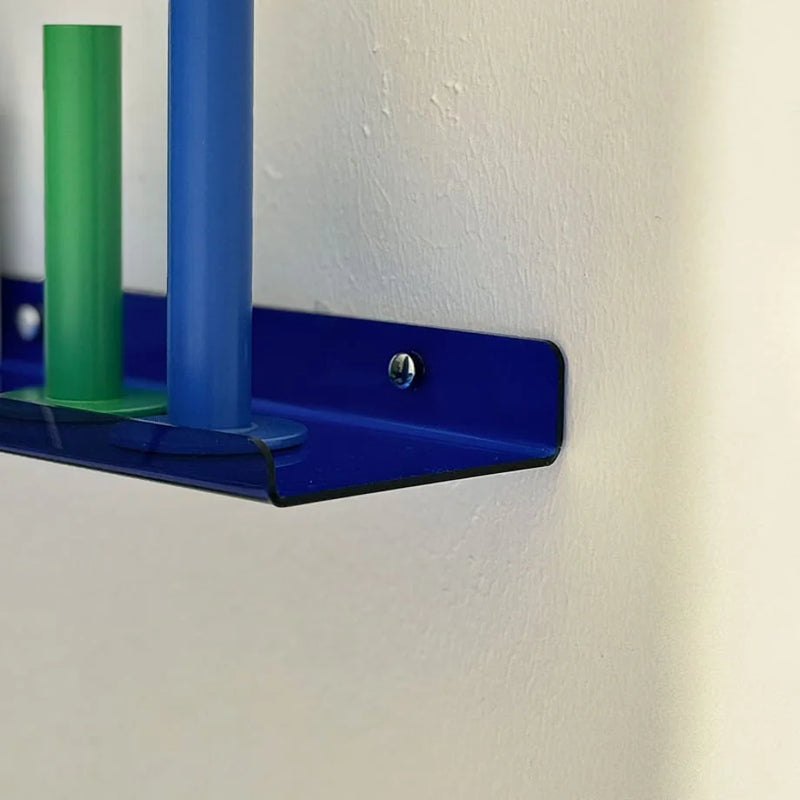
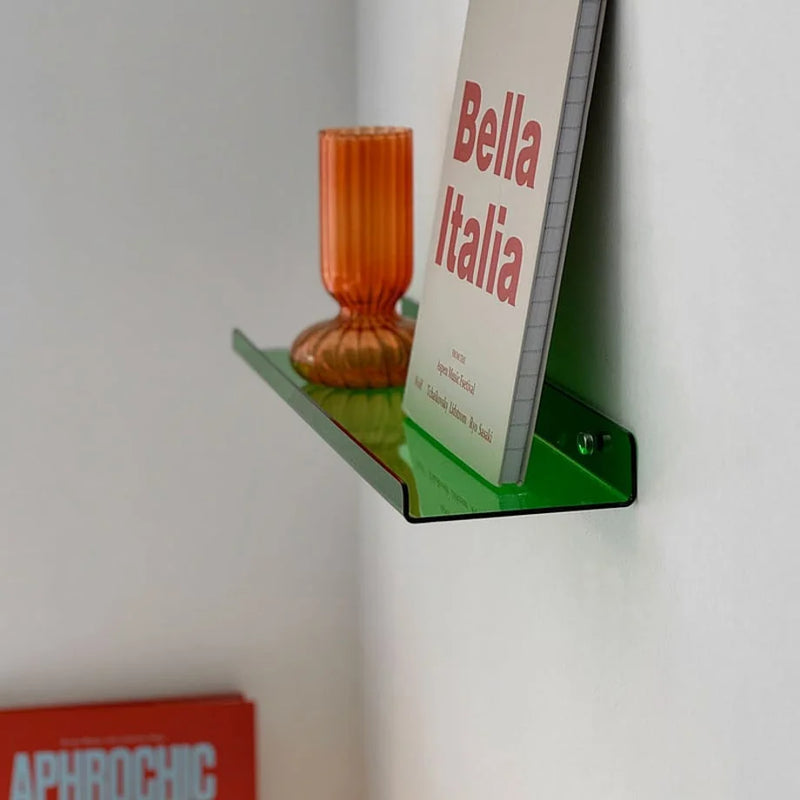
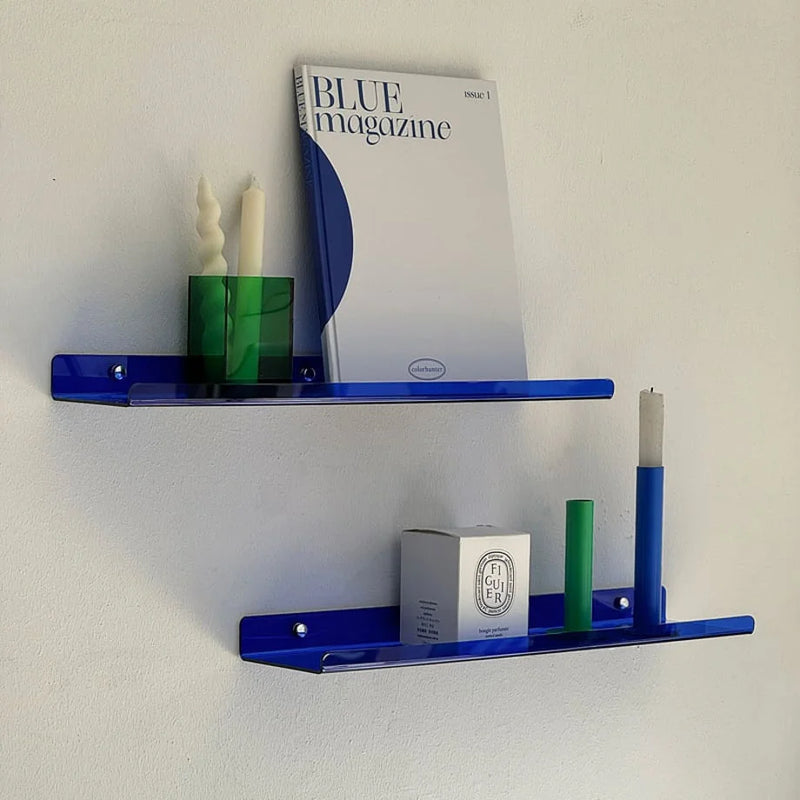
Why it works on this axis: a near-invisible ledge lets you give the wall a function without giving up the negative space. If your wall already has a strong headboard or art, skip this one. The shelf earns its place only on a wall that would otherwise read too empty to feel warm.
Stillness vs. Ritual: the calendar axis
The nightstand is where the two lines argue about time. The Japanese hand wants stillness: nothing that beeps, nothing that demands attention, a surface so quiet it lowers your pulse. The Scandinavian hand wants a small daily ritual, an object you touch on purpose, the kind of slow domestic habit hygge is built on. A phone face-down satisfies neither. A digital clock satisfies neither.
A perpetual calendar splits the difference better than anything we've tried. The Tactile Minimalist Wood Perpetual Calendar has no power, no glow, no number that updates itself. You turn it by hand each morning, which is the ritual, and then it just sits there in pale wood being still, which is the stillness. We shot it on a bare nightstand for a Japandi set and the thing that surprised us was sound: the small wooden click when you change the date became the calmest noise on the shoot. That click is the whole axis in one gesture.


Why it works on this axis: it gives you one small daily action without adding a single thing that lights up or makes noise on its own. If you already wake to a paper journal or a hand-wound clock, you have the ritual covered and don't need this. It's for the nightstand that's gone too still to feel human.
Cool Light vs. Warm Glow: the lamp axis
Light is where most "Japandi" bedrooms quietly fail. The Japanese hand pulls toward clean, even, almost shadowless light: nothing dramatic, nothing moody. The Scandinavian hand softens hard toward a low warm pool you can read beside, the single most hygge thing a room can own. Aim only for clean and the room goes clinical after dark. Aim only for cozy and you lose the daytime crispness Japandi is known for.
The fix isn't a clever bulb, it's a second, smaller light that's allowed to be warm while the main light stays neutral. We use the Retro Glossy Mushroom Accent Lamp for this on bedside duty. Its glossy dome throws a soft, contained glow rather than a wide flood, so it warms the corner without recolouring the whole room. On one late shoot we left only the mushroom lamp on next to a flip clock, and the room dropped into evening mode instantly while the wall behind it stayed calm and uncoloured. That's the softening hand getting its moment without overruling the pull.
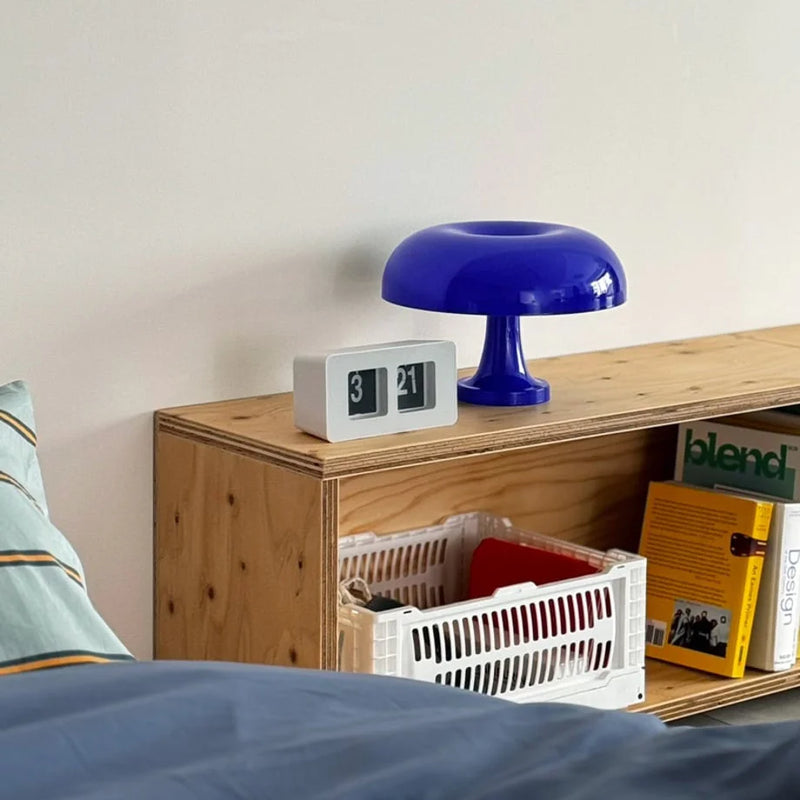
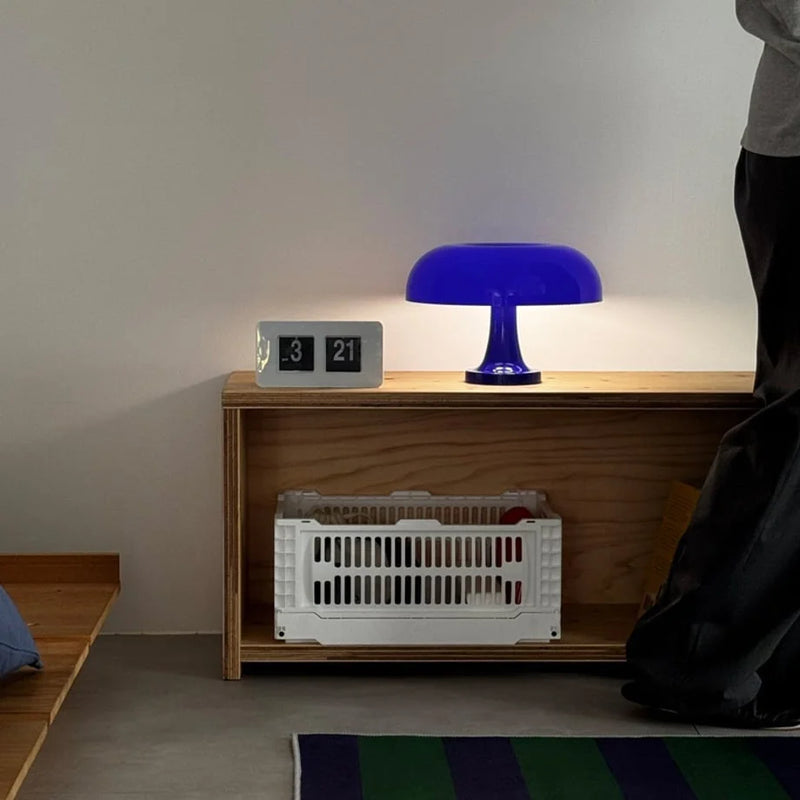
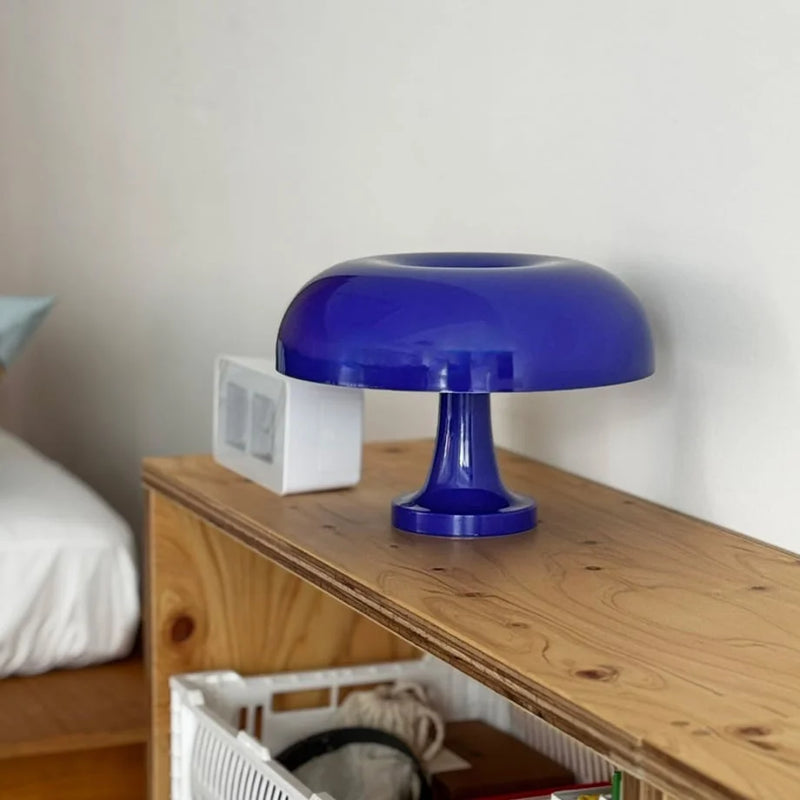

Why it works on this axis: a small, contained warm light lets your ceiling light stay honest and neutral, so the room can be crisp by day and soft by night without changing a bulb. If your bedside already has a warm reading lamp, you're set. This is for the room that only has one cool overhead and goes cold the moment the sun leaves.
Hard Edge vs. Soft Border: the mirror axis
The last axis is the one people skip, and it's the mirror. The Japanese hand wants a hard, honest line: a thin black frame, a clean rectangle, no fuss. The Scandinavian hand wants a little give, a breathing margin, something that doesn't feel like a graphic stamp on the wall. A bare frameless mirror leans too cold; a thick ornate frame leans too busy. The trick is a frame that does both at once.
The Japandi Black Framed Wall Mirror with Photo Mat Border is built on exactly this compromise. The slim black frame gives you the hard Japanese edge, and the inset mat border around the glass gives you the soft Scandinavian margin, a band of quiet space that keeps the mirror from reading as a harsh black box. In our studio we hung it on a pale wall over a low dresser, and the mat border did something we didn't expect: it made the mirror feel framed like art rather than fixed like hardware. That double read, edge plus margin, is the cleanest single illustration of the whole test.


Why it works on this axis: the mat border buys you Scandinavian softness without giving up the Japanese line, so the mirror reads intentional instead of either cold or cluttered. If your wall already leans busy, a frameless mirror might be the calmer call. This one is for the pale, quiet wall that needs one piece to anchor it.
Reading the Room Back
Once the four axes are in place, there's a last step we do before we call a set finished: we stand back and read the room as a whole, counting how many things are pulling and how many are softening. A calm Japandi bedroom usually lands close to even, with the pull side a hair ahead. If everything in the room is hard-edged and bare, add one soft thing (the warm lamp, a wool throw, the worn cover of a real book). If everything is plush and warm, take one thing away and let a stretch of wall go empty again.
This is also where texture quietly does its job. The pieces above are mostly the "pull" side of the rope, so the soften side often comes from what you wear and lie under, not what you hang. A plush set like the Soft Piped Plush Pajama Set in creamy beige is the kind of low, tactile warmth that lets the hard pieces stay hard, the same logic as the lamp, just worn instead of hung. You don't have to style it into the room; the point is that softness can live in the linen and the loungewear, freeing the surfaces to stay spare.
None of this needs a fixed checklist. The test is portable on purpose: walk into any version of the room, point at one thing, and ask whether it's pulling or softening and whether the room needs that here. That single question travels with you long after this page is closed, which is the whole reason we named it.
Start With One Axis
You don't have to solve all four arguments this weekend. Pick the one your bedroom is losing right now. If the wall over your bed feels either bare-and-cold or busy-and-cluttered, start with the shelf axis. If the room goes clinical after dark, start with the light. Fix one axis, live with it for a week, and you'll feel the room rebalance before you touch the next.
Everything on this page lives in one place if you want to see the pieces together. Our Japandi Aesthetic Room Decor collection is where we keep the calm, clutter-free side of the catalogue, and it's the easiest spot to find the next axis to work on.

Sleek Minimalist Acrylic Floating Shelf

Japandi Black Framed Wall Mirror with Photo Mat Border
Written by the RoomDen styling desk — we style every product in our own daylight studio before it ships, and we build these guides from the sets we shoot, not from a trends list. Last updated June 2026.


