
The Gen Z Guide to Coastal Bedroom Decor (2026)
Skip the seashells. This guide rethinks coastal bedroom decor as a light condition, not a color scheme, with a simple Tide Line rule that lets one band of texture carry the whole room.

Coastal bedroom decor gets sold to you as a color: blue, white, a rope here, a starfish there. We think that's exactly why most coastal rooms feel like a hotel lobby instead of a place you'd actually sleep. After styling a few dozen rooms in our own studio, the thing that reads as "coastal" was never the palette. It was the light, and how little we let sit in front of it. A real seaside room is mostly air, a few honest materials, and one surface where texture catches the morning. Get that relationship right and you can do the whole look in soft greys and warm naturals without a single seashell.
This is the full guide we wish someone had handed us before we over-decorated our first beach-inspired set. We'll walk through a coastal bedroom the way the light actually moves through it across a day, from the bare 7am quiet to the lamp-lit evening, and the few real pieces that earn their spot at each hour. If you want to see the edit we keep pulling from, it lives in our Coastal Aesthetic Room Decor collection.
Contents

Coastal Is a Light Condition, Not a Color Scheme
Walk into any room that's genuinely by the water and the first thing you notice isn't the decor. It's that everything looks slightly bleached, slightly soft, like the color was rinsed out and left to dry in the sun. That's the effect you're actually chasing. Coastal isn't navy-and-white as a rule; it's the way ocean light flattens contrast and warms whites toward sand. When people ask us what coastal decor "looks like," the honest answer is that it looks like a room that has plenty of daylight and isn't fighting it.
That reframe changes every decision downstream. Instead of asking "is this beachy enough," you ask "does this let the light keep moving." A glossy navy headboard stops the light. A bare wall and one nubby cotton towel let it pool and travel. We learned this the slow way: our earliest coastal shoot had a blue accent wall, three woven baskets, and a jute rug, and on camera it read as busy, not breezy. We stripped it back to a pale wall and two textured pieces and suddenly it breathed. Less stuff, more air, is the whole game.
So before you buy anything, audit your light. A north-facing room with cool, even light wants warmer naturals (rattan, amber glass, oatmeal cotton) to keep it from going clinical. A bright south-facing room can take cooler greys and crisp stripes because the sun is already doing the warming for you. The decor is just there to give that light a few good surfaces to land on.
The Tide Line Rule (Our One Framework)
Here's the framework we use on every coastal room we style, and the one we'd hand a friend starting from scratch. We call it the Tide Line. On a real beach, the tide line is the single narrow band where the water meets the dry sand. Everything above it is bare and pale; everything below is wet, dark, and full of texture. A coastal bedroom works the same way: you pick one horizontal band in the room to carry all the texture and slightly deeper tone, and you keep everything above and below it deliberately bare.
Usually that band is the foot of the bed, where a folded throw or a draped towel sits. Sometimes it's a single shelf, or the surface of a nightstand. The rule is that you commit to one tide line and resist decorating the rest. A room with three "feature" surfaces has no tide line; it just has clutter wearing a coastal costume. A room with one has a place for your eye to rest and a place for the light to run free. As we walk through the day below, watch how every piece either is the tide line or stays bare to protect it.
7am: The Bare Room Wakes Up

Why Coastal Bedrooms Start Empty
Morning is when a coastal room has to be the most honest, because there's nothing to hide behind. The first answer to "how do you make a bedroom look coastal" is almost always subtract. Clear the nightstand down to a lamp and one object. Take the throw pillows down to two. Leave a stretch of wall blank above the headboard so the early light has somewhere plain to fall. An empty pale surface in good light already reads coastal before you've added a thing; most rooms fail because they never let that emptiness exist.
The trap is that an empty room can tip from "serene" into "unfinished." That's where the tide line saves you: you're not aiming for sparse, you're aiming for one place with weight and everything else clean around it. Subtraction first, then a single, deliberate addition.
The First Texture You Add
So what's the single deliberate addition at the foot of a bare morning bed? For us it's almost always a soft, low-key towel set folded as the tide line. A striped cotton towel does the coastal job a decorative pillow can't: it reads as "lived-in seaside," it's genuinely useful, and the stripe gives the eye a quiet rhythm without shouting. Our Plush Striped Cotton Towel Set in white and black is the one we reach for most when a room needs grounding but not color, the black stripe just deep enough to act as that tide-line shadow against a pale bed.
How do you start a coastal room without buying furniture? Begin here: fold one textured set at the foot of the bed and leave the rest of the surface bare. That's a finished tide line for the price of a towel.

Midday: Where the Stripe Lives
By midday the light is flat and generous, and this is when stripes earn their keep. A stripe is the most coastal pattern there is for a simple reason: it's the horizon, the deck chair, the breton tee, the awning, all of it abstracted into a line. But not every stripe says the same thing, and at full daylight the differences show. This is the section to slow down on, because choosing your stripe is really choosing your coastal dialect.
The Stripe Family, Decoded
We styled three of our striped sets side by side in the same midday window once, just to settle an argument in the studio about which one was "the coastal one." The surprise was that all three worked, but for different rooms. The takeaway: stripe scale and contrast change the temperature of a coastal room more than the actual colors do.
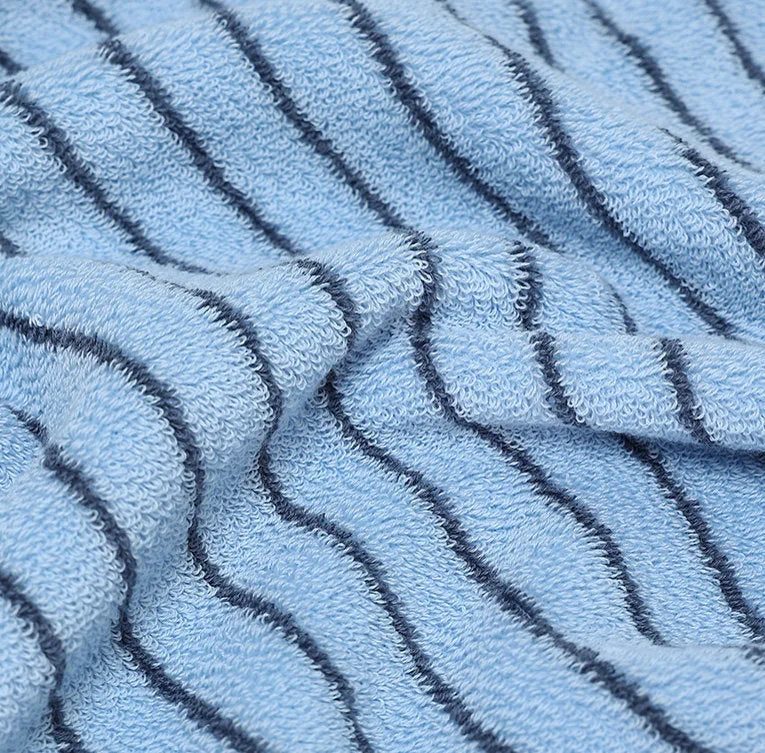
A Soft Pinstripe Cotton Towel Set in light blue with a thin green border is the quietest of the family. The pinstripe is so fine it reads almost as solid from across the room, then resolves into a coastal line up close. This is the one for a small or north-facing bedroom where you want coastal without the contrast feeling loud at 7am. It's the pinstripe we'd put in a room that already feels calm and just needs a whisper of seaside.
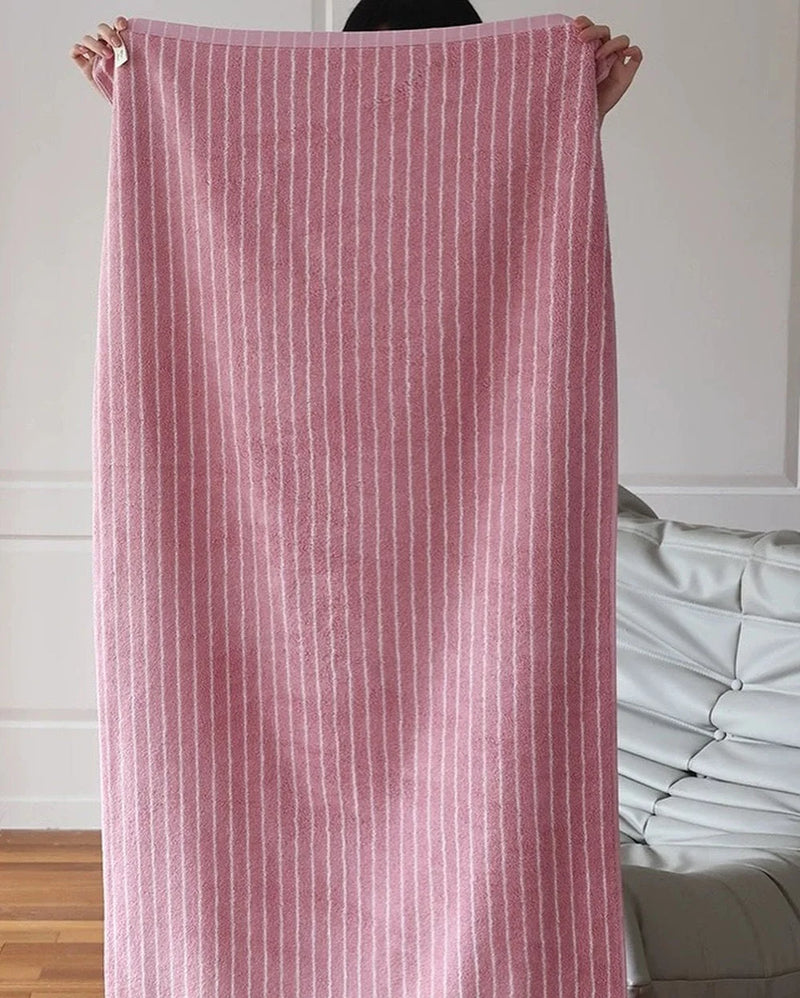
The Plush Pinstripe Cotton Towel Set in pink and white is our argument that coastal doesn't have to mean cold. Sun-faded pink is a real beach color, the inside of a shell, the sky twenty minutes after sunset, and against a warm white bed it keeps the room soft and unfussy. We reach for it when a coastal room is reading too crisp and needs a little warmth pulled back in.
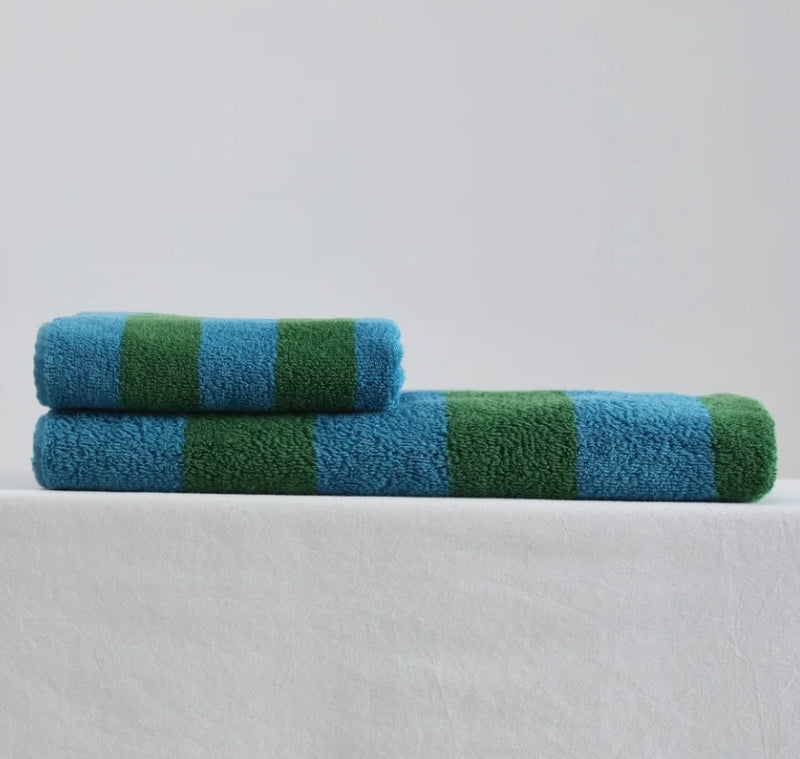
Then there's the Plush Bold Stripe Cotton Towels in blue and green, the loudest of the three and the one for a bright, sun-flooded room that can carry contrast. Wide blue-and-green bands are unapologetically beachy; in a dim room they'd feel heavy, but in strong light they snap into focus and become the whole tide line on their own. Pick one stripe family per room and let it lead.

Soft Pinstripe Cotton Towel Set

Plush Pinstripe Cotton Towel Set
Choosing Your Coastal Mood
So which stripe is "yours"? Stand in the room at the brightest hour and notice what the light is already doing. If it's cool and even, warm the room with the pink pinstripe. If it's calm and you want to keep it that way, the light-blue pinstripe stays a whisper. If the room is flooded with sun and feels a little flat, the bold blue-and-green stripe gives it the contrast it can handle. The room tells you; you're just listening.

Afternoon: One Stem, One Vessel
By afternoon the room is settled, and this is the hour for the smallest, most coastal gesture of all: a single stem in a natural vessel on the nightstand. Nothing says "someone lives here and brings the outside in" like one dried branch or a few stems of sea grass. The mistake is the big lush bouquet, which reads florist, not foreshore. Coastal flora is sparse and a little wind-bent, so the vessel matters as much as what's in it.

For the natural, just-back-from-the-beach version, our Handwoven Rattan & Glass Bud Vase wraps a small glass tube in woven rattan, so the water and stem show through but the vessel itself has that warm, basketwork texture coastal rooms run on. As a set of three different heights it makes a tiny tide line of its own on a shelf; we like one alone on a nightstand with a single dried stem and nothing else. It's the piece that warms up a cool room without adding a drop of color.
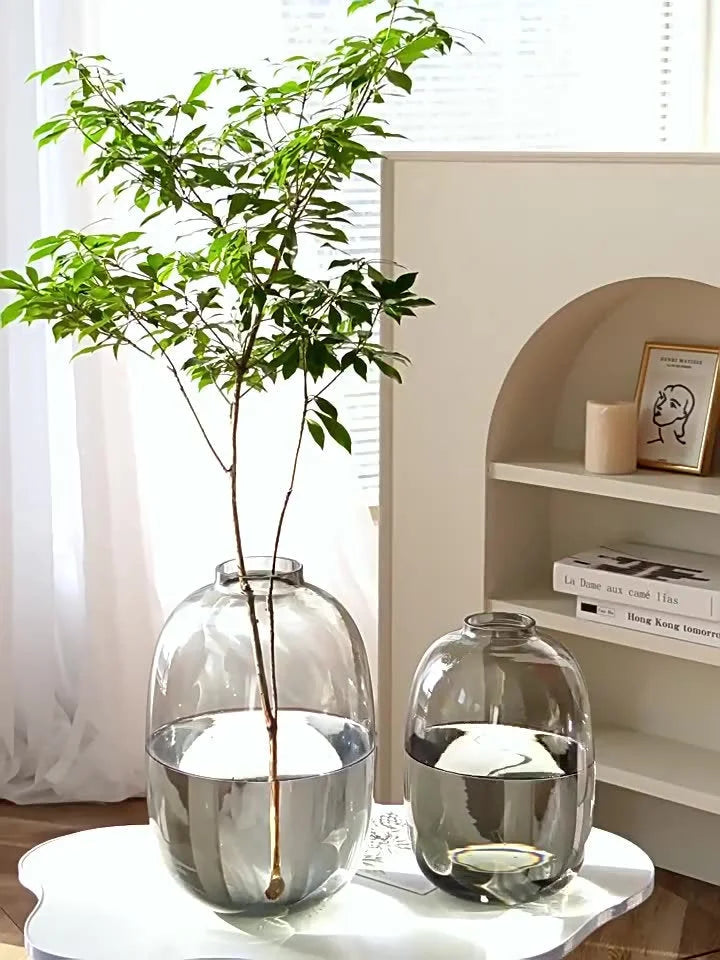
If your coastal lean is cooler and more sea-glass than driftwood, the Minimalist Tinted Oval Glass Vase is the move. In smoky grey it catches afternoon light like a tide pool, and in the amber-brown finish it does the opposite, pooling the light warm. Either way the rounded glass stays quiet enough to hold a single branch and let the shadow it casts become part of the styling. One stem, one vessel, a lot of restraint, and the nightstand is done.

Handwoven Rattan & Glass Bud Vase

Minimalist Tinted Oval Glass Vase
Evening: When the Light Goes Amber

The hour most coastal guides skip is the one that decides whether you actually want to be in the room: evening. Daylight did the coastal work for you all day, and now it's gone. The mistake is bright overhead light, which turns a soft seaside room into a bathroom. The fix is to go low and warm, one small pool of light near your tide line. A candle on a wooden stool beside the bed, a lamp with a warm bulb, and the same room that read crisp and breezy at noon now reads like a beach house after dinner.
This is also where amber glass pays off twice: that tinted vase that caught cool afternoon light glows warm under a lamp, so a single piece carries the room across both halves of the day. You don't need more decor for evening; you need less light, placed well. Let the rest of the room fall into soft shadow and keep the glow where your eye already rests.
What Color Actually Belongs in a Coastal Bedroom
People ask what the colors are for beachy bedrooms, expecting a swatch of navy and white. Here's the more useful version, drawn from what we actually keep reaching for: the base is warm white and oatmeal (sand, foam, bleached wood), the texture layer is natural rattan and raw cotton, and the accent is one of three sea tones, soft blue, faded pink, or muted sea-green, used in a single stripe or a single vessel, never spread across the whole room. The amber and smoky greys of glass sit in the middle as the "wet sand" neutrals that warm or cool the room as needed.
Notice what's missing: bright primary blue, glossy white, anything that reflects hard. Coastal color is color that's been left in the sun. If you keep your palette to those three families and only let it bloom on the tide line, you can do a fully coastal bedroom without it ever tipping into theme-park nautical. For the full set of pieces we build these rooms from, the Coastal Aesthetic Room Decor edit is where we keep them.
Build It One Tide Line at a Time
You don't need a coastal bedroom by the weekend. The whole point of the tide line is that you commit to one band of texture and leave the rest to the light, which means you can start with a single piece tonight. Fold one striped set at the foot of the bed, or put one stem in one vessel on the nightstand, and clear everything else off that surface. That's a real coastal room, just a small one. Add the next layer when the first stops feeling new.
Start where the light is best in your room and build outward from there. When you're ready for the next piece, this is the edit we pull from for every coastal room we style.

Coastal Aesthetic Room Decor

Handwoven Rattan & Glass Bud Vase
Written by the RoomDen styling desk — we style every product in our own daylight studio before it ships, and yes, we really did line up three striped towel sets in the same window to settle the argument. Last updated June 2026.


