
Japandi Bedroom Ideas: Japanese Calm Meets Scandi Warmth
A morning walk through a japandi bedroom that shows how Japanese restraint and Scandinavian warmth meet at the wall, and why the spaces you leave bare matter as much as the shelf you hang.

Most of the best japandi bedroom ideas don't reveal themselves at noon. They show up around 6am, in that thin grey light before the day decides what it wants to be, when a room is just its bones: the wall, the shelf, the one object you chose to keep at eye level. We've shot a lot of japandi spaces in our own daylight studio, and that early hour is when we learn the most about a room. The clutter hasn't woken up yet. What's left is the quiet bargain Japandi makes with you every morning, Japanese restraint on one side, Scandinavian warmth on the other, meeting somewhere soft in the middle.
So instead of handing you a list, we want to walk you through one. Pretend you've just opened your eyes. We'll move the way you'd actually move through the room as the light comes up, from the doorway to the bed wall to the corner you read in, noticing where the wall does the quiet work. By the time the sun's fully in, you'll have a feel for how a japandi bedroom is built, not from furniture, but from what hangs at the edges of it.

Contents
First Light at the Doorway
Stand in the doorway for a second before you step in. This is the threshold, and in a japandi room it earns its keep. Japanese homes treat the entry to a space as a place to set down the day, not just walk past, and the Scandinavian instinct agrees: give the eye one warm, useful thing to land on, then let it rest. You don't want a wall of hooks and a shouting gallery here. You want a single quiet ledge that says this is where small things live, so the rest of the room can stay clear.
A low arched shelf does this without making a scene. We styled the cream arched wall shelf right beside a dark wood door in our studio, and the curve of it softened the doorway corner the way a smooth river stone softens a path. Keys, a folded note, a little ceramic dish, that's the whole job. It catches the morning hand-off so nothing migrates to the nightstand, and the rounded top edge keeps it from reading as hardware. It reads as part of the wall.
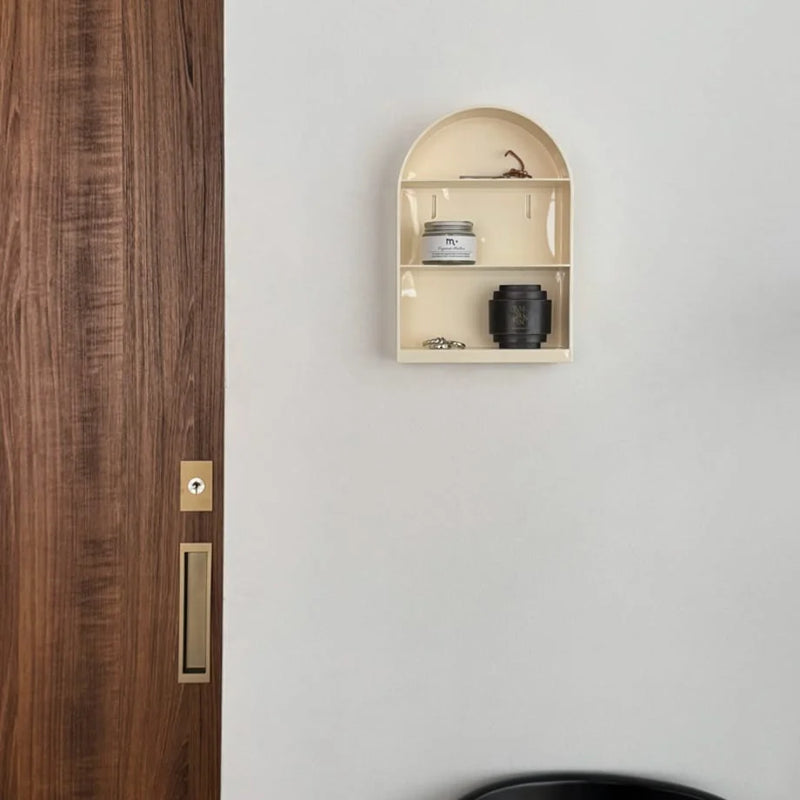
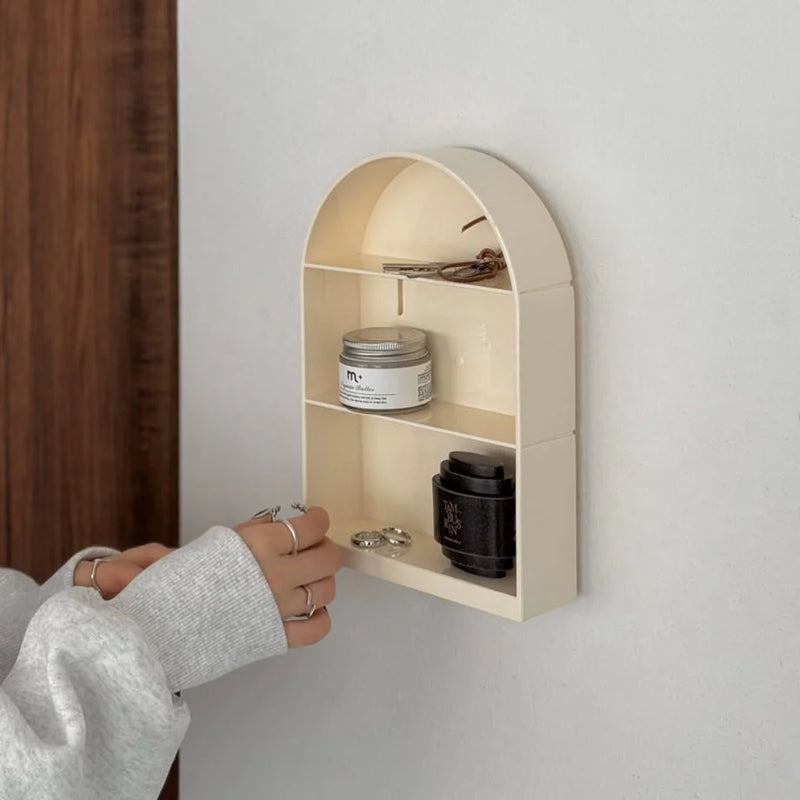
One thing we noticed only on camera: the cream finish goes warmer or cooler depending on the wall behind it. Against a true white wall it looked a touch clinical at 7am; we moved it onto a wall with the faintest oat undertone and it warmed right up. If your bedroom wall runs cool, that's worth knowing before you mount anything, the shelf borrows its temperature from the paint.
The Wall Above the Bed
Now turn and look at the bed. This is the wall everyone overloads, and it's the wall Japandi most wants you to leave alone. The headboard zone is the visual centre of a bedroom, so the room's whole sense of calm gets decided here. The Japanese idea of Ma, the active emptiness that gives the filled parts meaning, lives or dies above your pillow. Get it right and the bed feels held. Get it wrong, with a cluster of frames and a macramé and a clock, and the room feels like it's still talking after you've gone to sleep.
Why the headboard wall stays bare
Our rule, learned the hard way after a shoot where we crammed three frames over a bed and the whole set photographed as anxious, is to keep the wall directly behind the headboard almost entirely empty. The warmth in a japandi bedroom doesn't come from filling that wall. It comes from the bedding, the wood tones, the light. The wall's job is to be the pause, the held breath. We let it stay blank and put any display slightly off to the side, where it frames the bed instead of crowding it.

One ledge, eye level, nothing more
If you do want a shelf near the bed, give it a single line and stop there. We mounted one slim floating shelf in a bedroom nook just above the headboard line, sat one book and one small vase on it, and left the rest as air. The discipline is the design. The shelf's edge is barely there, so what you notice isn't the shelf, it's the two objects floating in the negative space, which is exactly the Japandi sleight of hand: the warmth (a book you're actually reading, a vase with a single stem) reads louder precisely because it's surrounded by nothing.
That restraint is the whole aesthetic in one move. Scandinavian comfort tells you to add the book and the stem; Japanese Ma tells you to add nothing else. Hold both and the wall above your bed does more with two objects than most rooms do with twenty.
The Reading Corner Wakes Up
Keep walking. The light's stronger now, mid-morning, and it's reaching the corner by the window, the one that wants to be a reading spot but usually just collects a chair and a charging cable. This is where Japandi gets to be warm out loud. The bed wall was about restraint; the corner is allowed to be the cozy one, as long as it stays honest about it.
We like a slim vertical wall rack here, the kind that holds what you're actually mid-way through, the magazine, the two books with cracked spines, the thing you keep meaning to finish. A wireframe rack mounted on the wall beside the chair keeps the floor clear and turns your real reading pile into the decoration. There's something very Japandi about that, letting honest, used objects do the styling instead of props you'd never touch. In our studio shoot the gold wireframe almost disappeared against a pale wall and what you saw was the magazine, held mid-air, casting a thin morning shadow.
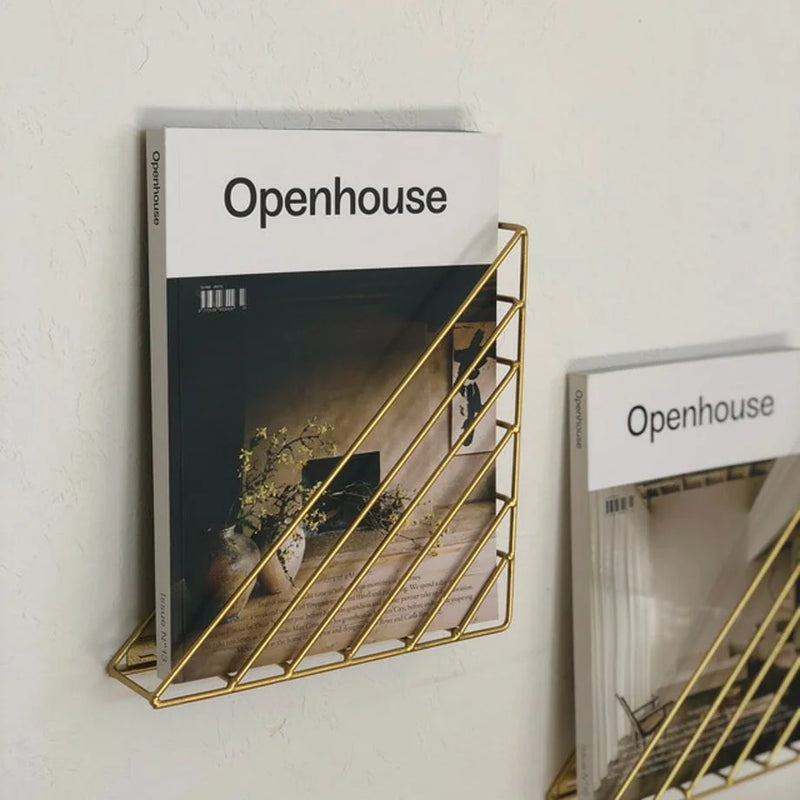
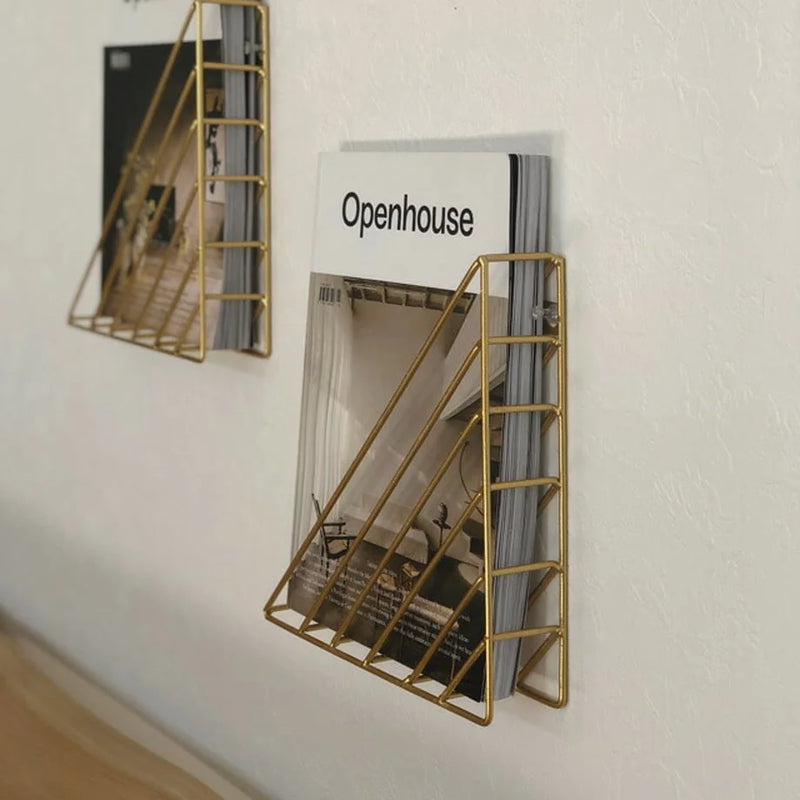
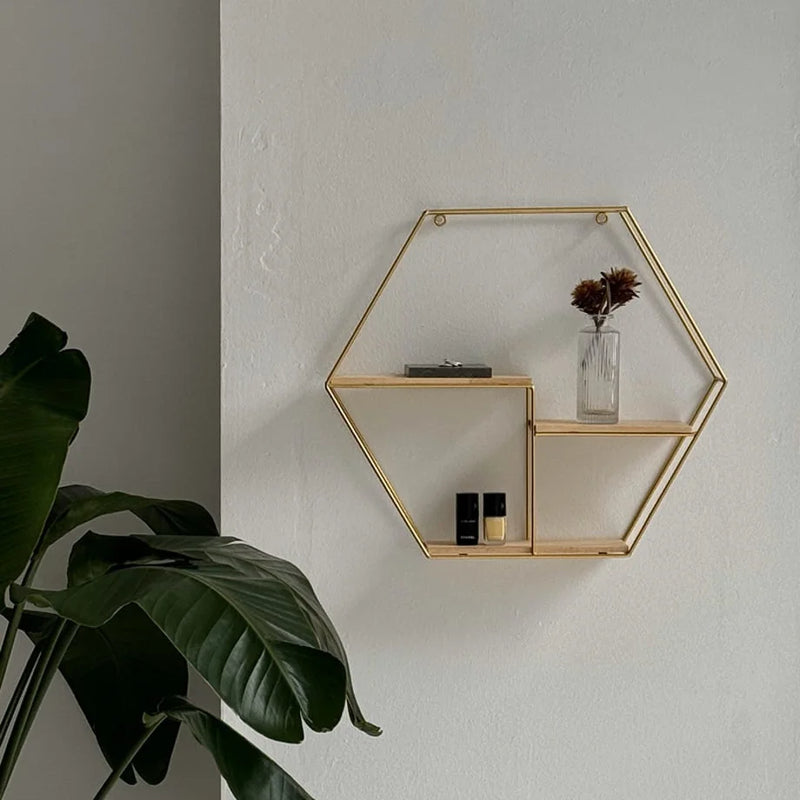
If the corner can take a little more, one small two-tier shelf with light wood tiers gives you a home for the things a reader accumulates, a tealight, a single trailing plant, a cup that's allowed to be there. The wood is the move: it's the Scandinavian warmth that keeps the corner from going cold and gallery-like. We kept ours to one plant and a lot of empty tier, because a reading corner that's already full isn't somewhere you want to sit. The point of the corner is to be ready for you, not finished without you.
What the Empty Wall Is Doing
By now the sun's properly up and the room's fully itself, and here's the thing we most want you to take from the walk: notice how much of this japandi bedroom is wall you didn't touch. The doorway has one shelf. The bed wall has almost nothing. The corner has a rack and maybe a small ledge. Everything between is bare, and that bareness isn't laziness or an unfinished to-do list. It's the design doing its quietest, hardest work.
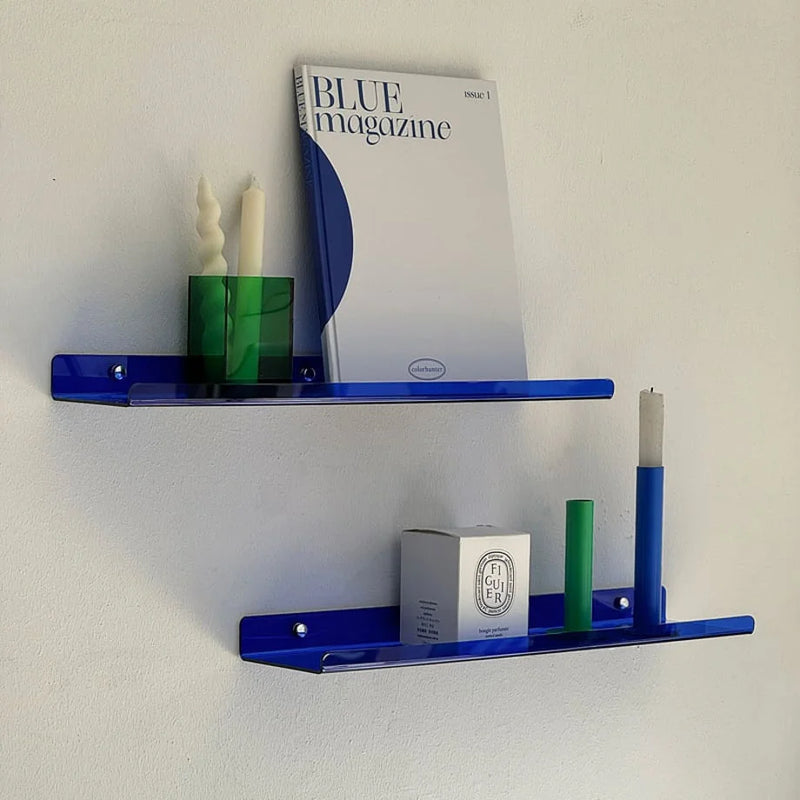
A glossy acrylic floating shelf taught us this on a shoot better than any mood board could. We put it up bright and minimal, expecting the shelf to be the star, and what actually carried the frame was the run of empty wall on either side of it. The shelf only looked that calm because it had somewhere to be calm in. Strip the empty wall away, crowd it with neighbours, and the same shelf would have looked frantic. The negative space wasn't the background. It was the other half of the design.
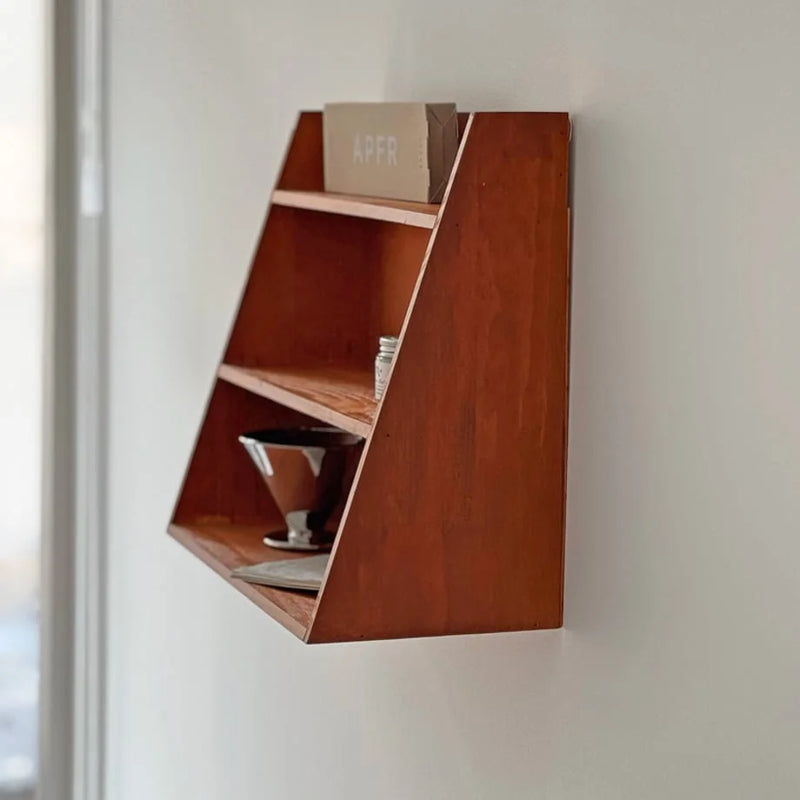
So if you're staring at a blank bedroom wall wondering what to put on it, the most Japandi answer is often: a little less than you think, and then nothing for a while. Hang one honest wood or warm-toned piece, live with it for a week, and let the empty stretches around it stay empty. That patience, the willingness to leave the wall mostly alone, is the difference between a room that's decorated and a room that lets you exhale when you walk in.
Where to Start in Your Own Room
You don't have to do the whole walk at once. Pick the wall the morning light hits first in your bedroom and put one piece there, a low arched ledge by the door, a single slim shelf near the bed, a slim rack for the books you're actually reading. Let it sit. The Japandi feeling, that calm-meets-warm hush, is something a room earns over a few quiet weeks, not something you buy in one afternoon.
When you're ready to choose that first piece, the wall shelves and ledges we styled all the way through this walk live together in one place. Browse the full Japandi Aesthetic Room Decor collection and start with the one wall that needs the least, not the most.

Written by the RoomDen styling desk. We style every wall piece in our own daylight studio before it goes live, so the calls we make here, where a shelf goes warm or cold, what an empty wall is really doing, come from shooting these objects ourselves. Last updated June 2026.


