
Desk Organization Ideas for a Clear, Calm Study Nook
A field guide to reading your own desk: sort the clutter into four types, match each to the organizer that actually fixes it, then keep it that way with a 60-second reset.

Good desk organization ideas come down to one principle: match the organizer to the kind of clutter you actually have, because a tray of loose keys and a leaning stack of books are two different problems that want two different tools. Most desks aren't a single mess; they're a few specific patterns layered on top of each other. Once you can name each pattern, the right fix is usually obvious, and you stop buying bins on a hunch.
We make desktop organizers for a living, which means we spend a lot of time watching what actually clears a surface versus what just relocates the pile. This guide is built as a quick field guide: four typical desk scenarios, the organizer that solves each, and a 60-second reset move that keeps the whole thing holding. Think of it less as a tidy-up lecture and more as a diagnosis, so you can read your own desk, pick what fits, and end up with a workspace that feels like you on a good day rather than a surface you have to apologize for.
Contents
How to Read Your Own Desk
Before you organize anything, it helps to diagnose what you're actually looking at. A clear surface isn't really about minimalism for a photo; it's about how many small open questions the desk asks of you each time you sit down. Do I need that? Where does it go? Is that the cable I was looking for? Every organizer's real job is to answer one of those questions in advance, so your eyes have less to sort.
The useful move is to stop treating the desk as one undifferentiated mess and start sorting the clutter into types. After enough hours rearranging surfaces, the chaos resolves into four recurring patterns, and almost every desk is some mix of them. We saw this clearly when we restyled our own shooting desk last winter: once we sorted the surface by type instead of by panic, choosing the right pieces took minutes, and people on the team actually lingered there longer between shots. The space invited you to stay.
So the framework below is diagnostic. Read the four scenarios, find the one or two that describe your desk, and reach for the matching fix. You don't need all four; you need the ones that name your specific clutter.

Four Desk Scenarios and Their Fix
Here are the four patterns, written as a field guide. Each one describes a common type of desk clutter, the kind of organizer it calls for, and the specific piece we reach for in our own studio. Match yours, then skip the rest.
The Drift: Loose Small Stuff With No Home
The Drift is the back-edge collection of objects that have no assigned place: keys, a hair tie, loose change, the earbuds case, a lip balm. They migrate to whatever flat spot is closest, and because no single one feels worth putting away, the whole drift just grows. The diagnosis here is simple: none of them have a home, so your eyes have to re-sort them every time you look up.
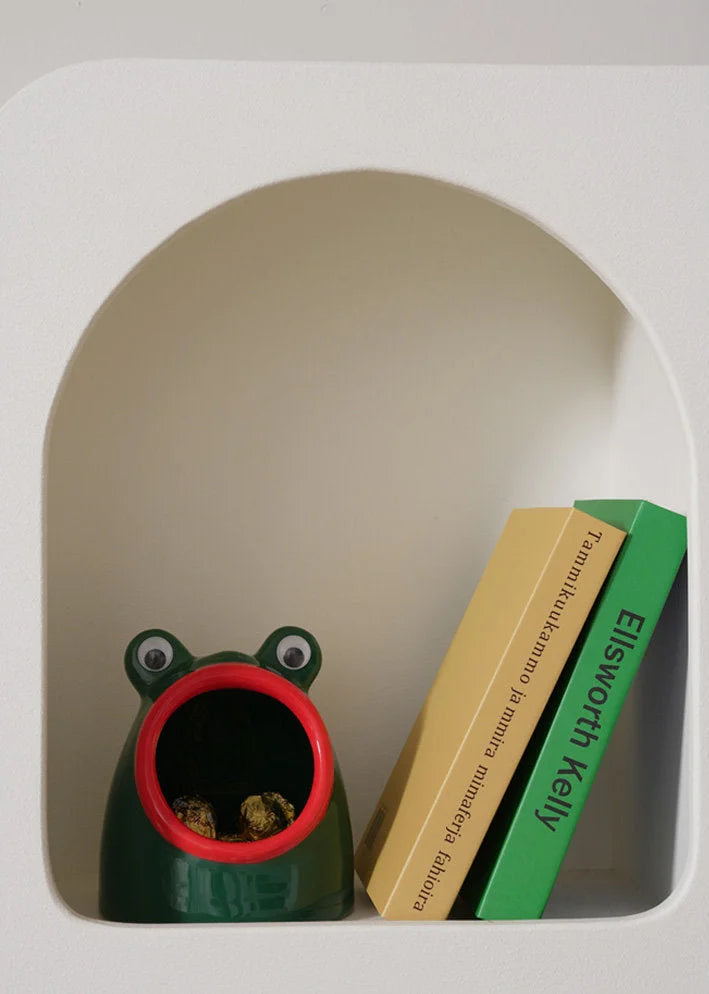
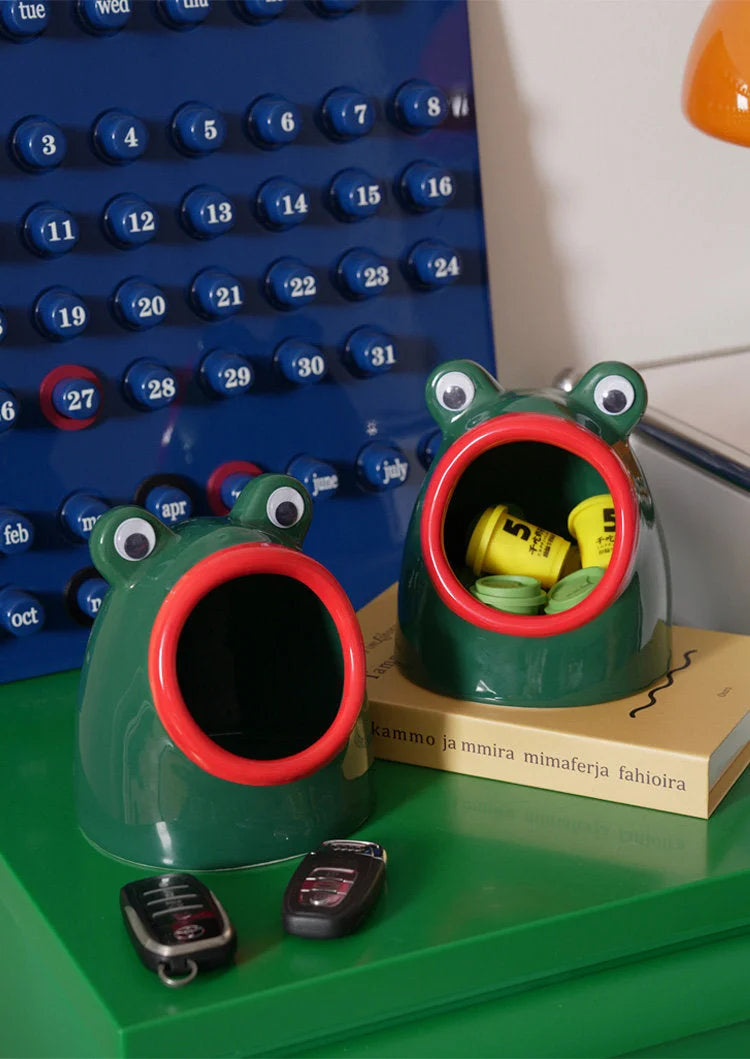
The prescription is a single shallow catchall that turns "loose stuff" into "the stuff that lives here." Our Glossy Googly Eye Frog Ceramic Catchall Tray is the one we keep reaching for, partly because it works and partly because it makes the act of dropping your keys somewhere feel like a tiny moment rather than a chore. A frog with a slightly absurd face holding your keys turns a dead corner into a small daily greeting. In our own shoots we filled one with gold-wrapped chocolates and the other with keys and earbuds, and the team kept reaching for the chocolate frog all afternoon, which is exactly the kind of pull a good catchall should have.

The Pile: Things You Want Close but Hidden
The Pile is a different pattern from the Drift. These are the things that do have a category, you just don't want to look at them all day: a tube of hand cream, spare batteries, the SD cards, the receipts you're not ready to deal with. Left on the surface they read as visual noise, but shoved in a junk drawer across the room they vanish completely. The diagnosis: you want them close but quiet.
The prescription is closed storage that still lives on the desk. The Smooth Minimalist Wood Desktop Organizer with Drawers gives you two soft-pull drawers right at arm's reach, so the cream and the cards stay one motion away without ever touching the open surface. We styled it on a vintage credenza next to a flip calendar and a stack of art books, and what sold us was how the warm wood reads as furniture, not office supply. It's the rare organizer that earns its footprint by disappearing into the room while quietly swallowing the clutter you'd rather not see.


The Sprawl: Pens, Brushes, and Everyday Tools
The Sprawl is the most common pattern of the four. Pens roll. Brushes splay. Scissors end up two surfaces away from where you need them. These are the tools you reach for constantly, so they can't go in a drawer, but laid flat they spread until they own half the desk. The diagnosis is that they need to stand up and gather, so a glance tells you everything is present and accounted for.
Two of our pieces prescribe the same fix in opposite moods, and which one is right depends on the energy you want the desk to have. For a soft, melted, slightly surreal corner, the Melting Cheese Ceramic Desktop Organizer holds pens and makeup brushes upright in a shape that looks like it's gently sliding off the table. For something punchier, the Glossy Retro Ghost Ceramic Pen Holder stands your pens up inside a little cartoon ghost, and it comes in enough colors that you can match it to whatever already lives on your desk. We lined three cheese organizers up across a green desk for a shoot, one in yellow, one cream, one beige, and the gradient alone made the surface feel composed instead of crowded.


Melting Cheese Ceramic Desktop Organizer

Glossy Retro Ghost Ceramic Pen Holder
The Lean: Books and References That Slump
The last pattern is The Lean. A few notebooks, a couple of reference books, the planner you actually use, all slumping sideways into a soft pile because nothing holds them up. A leaning stack reads as unfinished, and it slowly spreads into horizontal sprawl as the top books slide off. The diagnosis is a missing structural anchor; the prescription is the oldest one in the book, literally: a pair of bookends that turns a slump into a tidy spine-out row.
Our Smooth Smiley Snail Ceramic Bookends do the structural job while adding a quiet bit of warmth, two little snails with winking faces pressing your books upright from either side. They're heavier than they look, which is the whole point of a bookend, and we leaned a stack of fashion books between a pastel-yellow pair for a shoot and they didn't budge once across a full afternoon of moving things around them. A row that stands up straight is the fastest way to make a desk look decided rather than abandoned.


The Desk Reset: A 60-Second Return
Here's the part that completes the diagnosis: the right organizers won't keep your desk clear on their own. A catchall only works if you actually drop your keys in it, and a pen holder only works if the pen goes back. The objects give everything a home, but a short return move is what walks things home. So we use one tiny step at the end of every studio session, and it's the single thing that's kept our shooting desk from drifting back into chaos.
We call it the Desk Reset, and it has exactly three moves. One: everything loose goes into its catchall, no sorting, just drop. Two: every standing tool goes back upright in its holder, pens to the pen holder, brushes to the cheese. Three: books get pushed back between their bookends so the row stands straight. That's it, about a minute. You're not deep-cleaning; you're just returning the surface to its resting state so tomorrow-you sits down to a clear desk instead of inheriting today's drift.
The Desk Reset only works because each object already has an obvious home to return to, which is the quiet argument for buying organizers with personality rather than generic bins: you're far more likely to return a pen to a grinning ghost than to a plastic cup. The pieces and the return move make each other work. After two weeks it stops being a thing you remember to do and becomes the natural way you end a session.


Letting the Desk Sound Like You
Once the four scenarios are handled and the Desk Reset is doing its work, there's one decision left, and it's the one that actually matters: what do you want this corner to feel like? Organization is the structure; character is the reason you'll keep it up. A study nook that looks like a generic office tends to get treated like a generic office, which is to say, neglected.
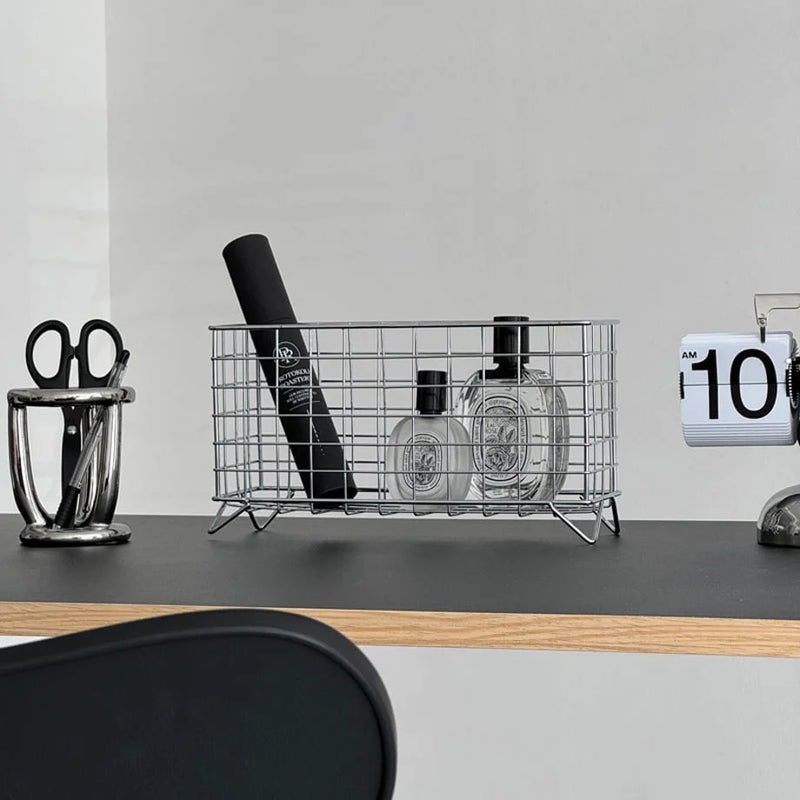
This is where the personalities of these pieces earn their place. If your desk leans cool and architectural, the Wireframe Grid Metal Desktop Organizer brings a chrome-silver, see-through grid that holds perfume, stationery, and small tools without adding visual weight, sharp and quiet at the same time. If your desk wants to make you smile when you sit down, the frog, the cheese, the ghost, and the snails do that instead. There's no wrong answer here, only the version that reads as you, and a desk that feels like you is a desk you'll want to come back to.


Start With One Empty Corner
You don't have to overhaul the whole desk this weekend. The easiest way in is to pick the one scenario that describes your desk most, the Drift, the Pile, the Sprawl, or the Lean, and solve only that. Clear a single corner, give it one organizer with a home for one category of stuff, and run the Desk Reset on just that corner for a week. The calm spreads on its own from there.
When you're ready to build out the rest, our full Desktop Organizers collection has the catchalls, drawers, holders, and bookends to cover all four, all in the same warm, characterful spirit. Pick the two or three that fix your specific mess, and let the desk finally feel like yours.

Glossy Googly Eye Frog Ceramic Catchall Tray

Melting Cheese Ceramic Desktop Organizer
Written by Mara Quinn, RoomDen styling desk. We style every organizer on a real working desk in our own daylight studio before it goes live, so the setups you see here are the ones we actually keep. Last updated June 2026.


