
Industrial Bedroom Decor: Warm Minimalism with an Edge
Industrial bedrooms don't have to feel like a parking garage with a bed in it. Using our Thaw Ladder, we show how raw metal, hard edges, and matte black warm up one deliberate rung...

So here's the question I get most often when someone tells me they want industrial bedroom decor but they're scared it'll feel like a parking garage with a bed in it: can a room built on raw metal, exposed edges, and matte black actually feel warm? Short answer, yes. We've styled this look in our own daylight studio enough times to know the cold version and the cozy version use almost the same objects. The difference is sequence. You don't pick industrial pieces and hope they soften. You warm them up on purpose, one rung at a time.
That's the whole idea behind what we call The Thaw Ladder, a way of thinking about industrial as a temperature you climb, not a single freezing setting you're stuck on. Bottom rung is the coldest a room can read: grey metal, hard geometry, nothing to grab onto. Top rung is industrial that still has its edge but invites you to sit down. Most "too cold" bedrooms aren't wrong about style. They just stopped on the first rung and never climbed.
Let me walk you up it.
Contents
Why Industrial Reads Cold (And It's Not the Metal's Fault)
Here's a thing most guides skip. Industrial doesn't go cold because of the materials. Metal isn't the villain. Cold happens when every object in the room agrees with every other object: same hardness, same matte grey, same right angles, no argument anywhere. Your eye reads that sameness as a showroom, not a bedroom. Nothing pushes back, so nothing feels lived-in.
We figured this out the slow way. Early on, in one of our own shoots, we set up a nightstand with a grey metal mirror, a black metal hook rack on the wall behind it, and a charcoal tray underneath, all gorgeous on their own. The photo came back looking like a hardware display. Beautiful. Dead. We didn't change the style that day. We changed the temperature, swapping one piece at a time until something in the frame finally felt like a person slept there.
That trial is where The Thaw Ladder came from. Four rungs, coldest to warmest. You can start anywhere on it. You just can't skip the climb and expect the room to feel like yours.

The Thaw Ladder, Rung by Rung
Four rungs. Each one adds a degree of warmth without throwing out the industrial bones. You don't need all four in one room. Honestly, most of our favorite setups climb to rung three and stop. But knowing where each piece sits tells you exactly what your room is missing when it feels off.
Rung One: Pick Your Cold Anchor
Every industrial bedroom needs one piece that's unapologetically hard. The cold anchor. This is the object that earns the word "industrial" in the first place, and trying to warm a room that has no cold anchor is how you accidentally land in farmhouse territory instead.
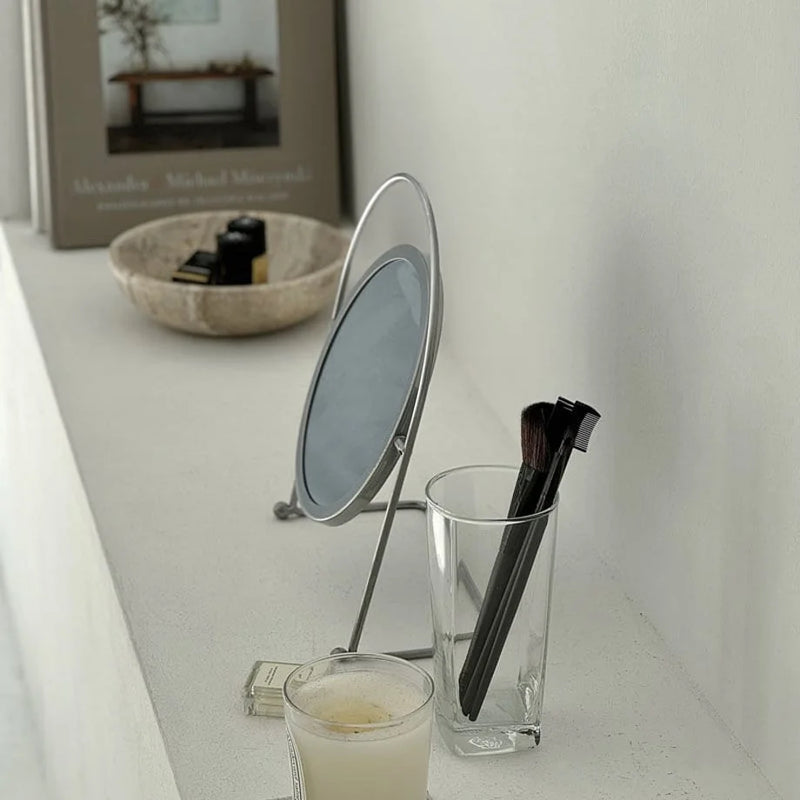
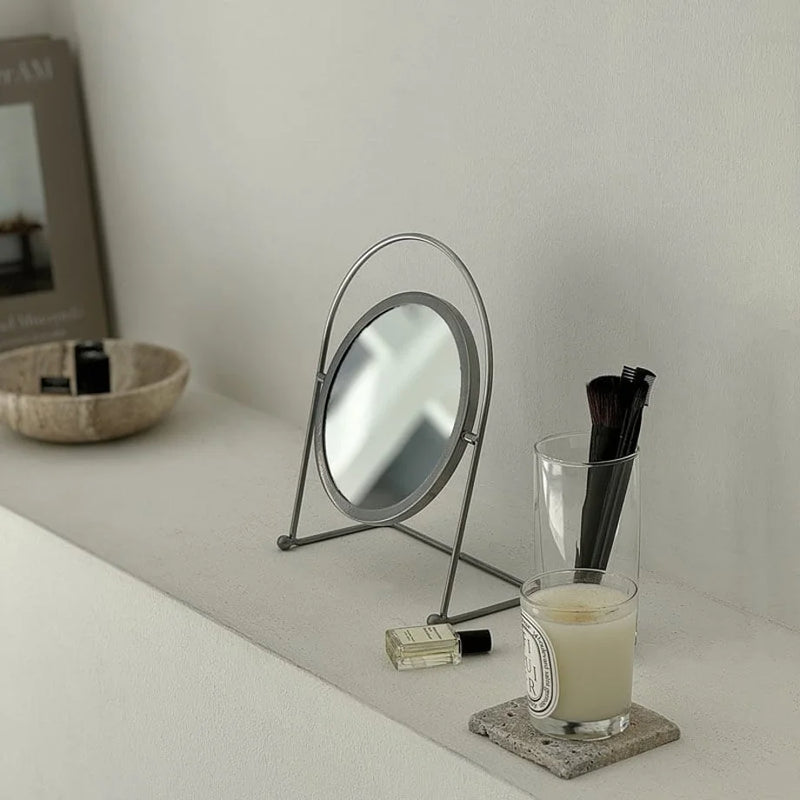
Our go-to anchor is a small one that does a lot of work. Where does the eye land first when it walks into the room? Give it something honest and matte to land on.
It's grey metal, slim, swivels on a pivot — proper industrial language, no costume. Why it works as a rung-one piece: a mirror earns its hardness back twice over because it also throws light around, so the coldest object in the room is quietly the one keeping it from going dim. Set it on a nightstand and you've planted your anchor. Now you've got something to climb away from.
Rung Two: Break the Grid With a Curve
Once your anchor is down, the room is reading hard and a little flat. Rung two fixes the flatness, and it's the cheapest rung on the ladder to climb.
The trick is geometry, not color yet. Industrial loves a grid: straight lines, right angles, things that stack. So the fastest way to soften it is to drop in one shape that refuses the grid. A curve. An organic form. Something the eye reads as "not made by a ruler."
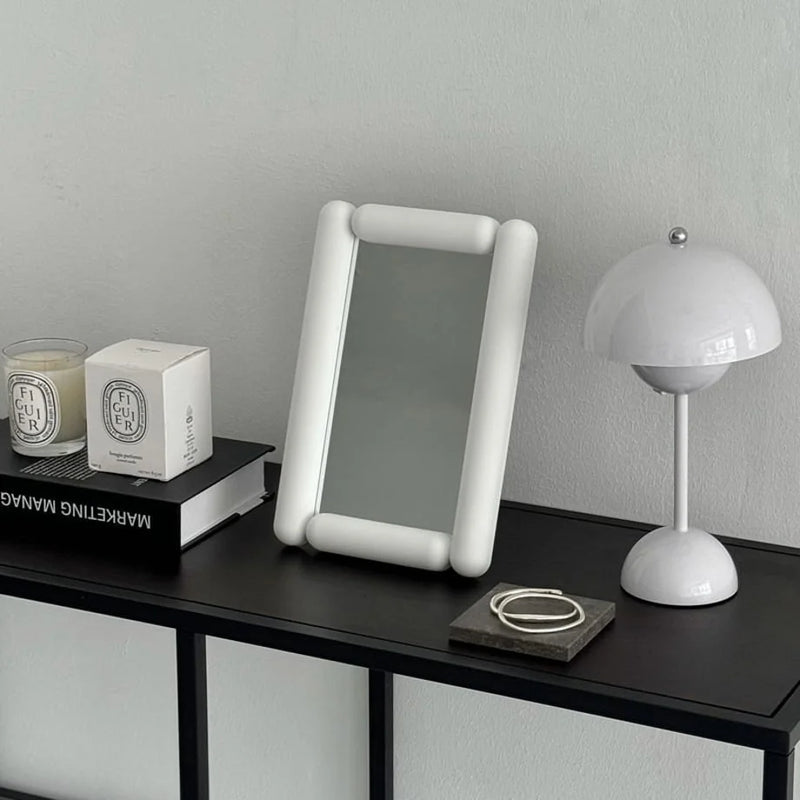
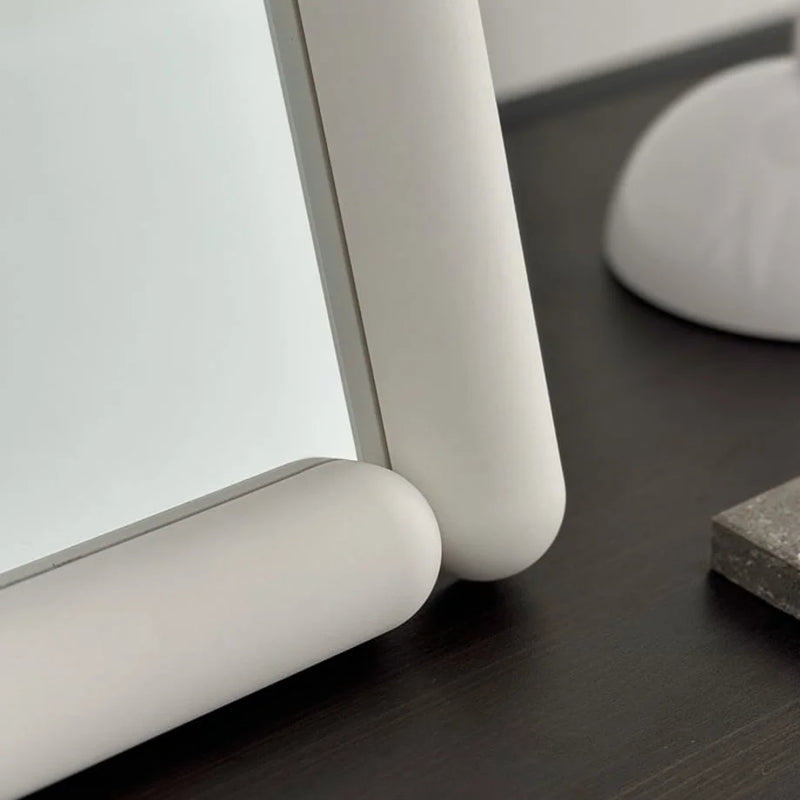
This is where a quiet rounded mirror does more than it should.

Why this one earns rung two: it's a soft pill shape on a dark surface, so the curve and the contrast do two jobs at once. We've shot it on a near-black console and the white rounded frame practically floats off it. Pair it across the room from your grey metal anchor and you've set up a conversation — one piece arguing for hard, one for soft. That tension is the warmth. A room with only one opinion is the cold one.

Rung Three: Let Color Do the Heavy Lifting
Now you've got hard and soft talking to each other. The room's no longer flat. But it might still read a little monochrome, a little serious. Rung three is where you let one controlled hit of color in, and where most of our favorite rooms decide to stop climbing.
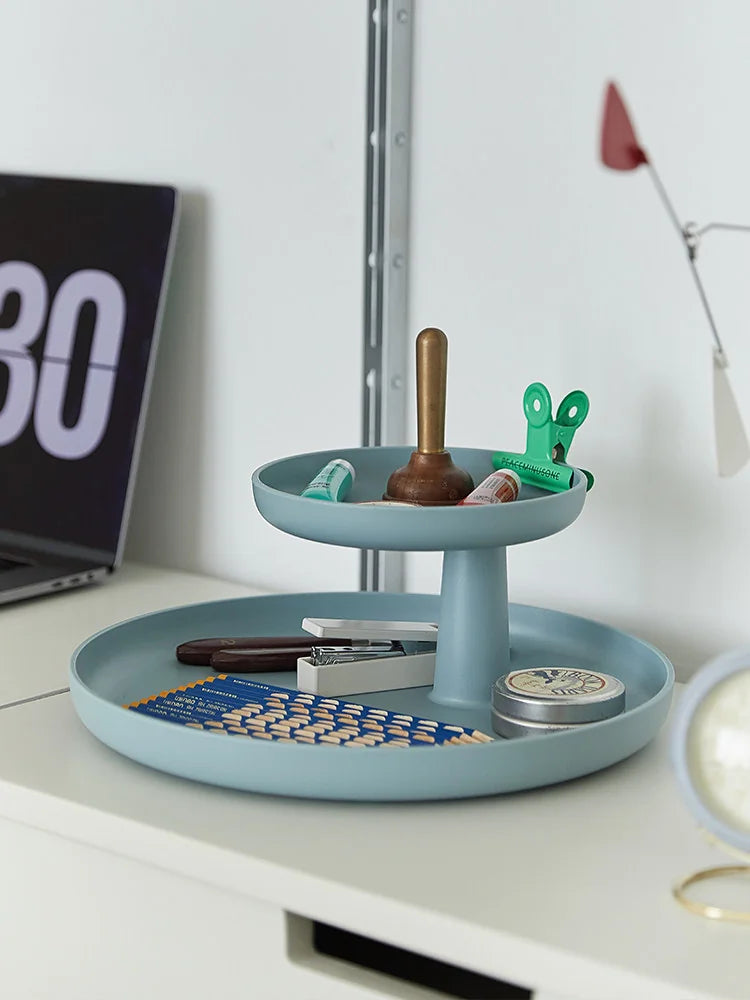
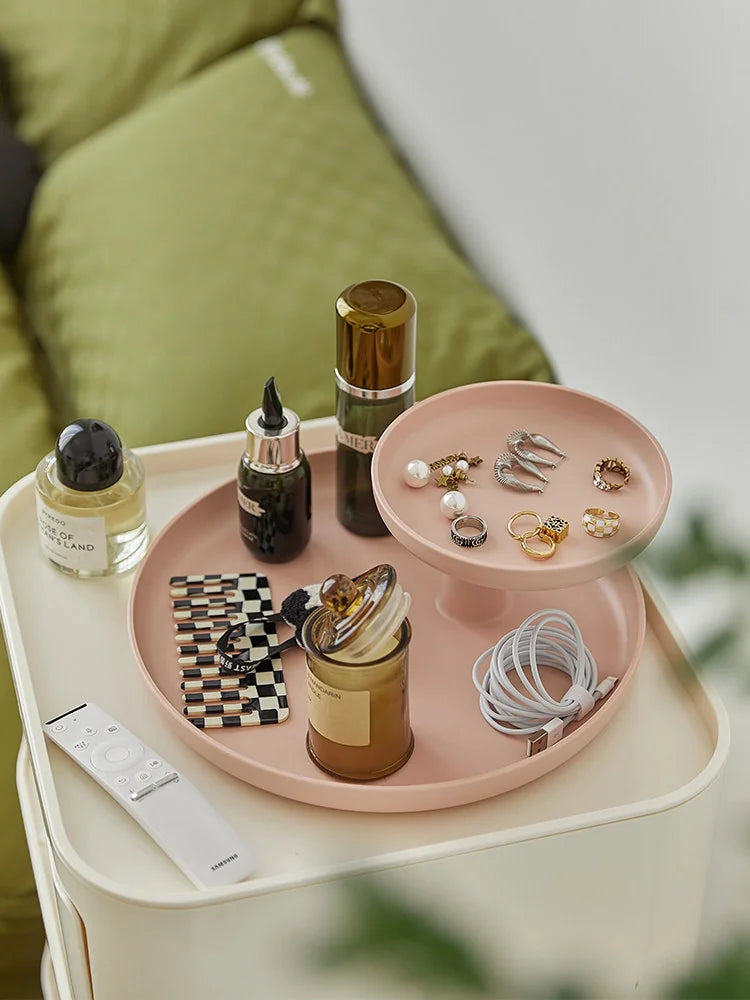
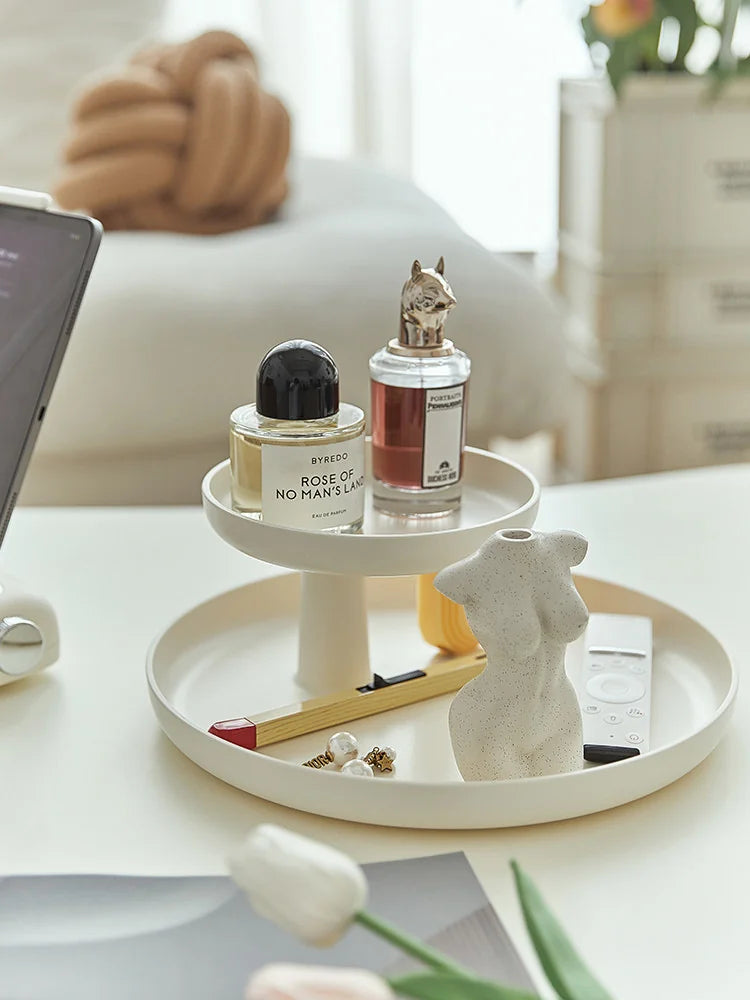
The mistake people make is dumping color everywhere and breaking the industrial spell. The fix is to keep color contained, boxed inside something structured, so it warms the room without going soft and pastel on you. A tiered tray is perfect for this, because the structure stays industrial while the color does the thawing.

Here's the why. The tiers and the color blocking keep a hard, modular silhouette (that's still industrial), but the actual color reads warm and alive against a black desk. We styled one on a matte black surface in the studio and it was the first frame all afternoon where the room stopped looking like a spec sheet. Color, contained. That's rung three.
If a single tray feels too small for the wall it's under, the same logic scales up. A bigger, deeper organizer can hold the same trick at twice the footprint.

This one comes in deep emerald, dusty blue, blush, and cream, and the move is the same: matte structure, one warm tone, nothing more. Why it works on rung three is the matte finish. It absorbs light instead of bouncing it like glossy plastic would, so even an emerald green reads grounded and grown-up rather than candy. Pick the one tone that fights your wall color least and let it be the only loud thing in the room.
Rung Four: Warm the Metal Itself
The top rung is the one most people never reach, because it sounds like a contradiction. You warm industrial by changing the metal, not removing it.
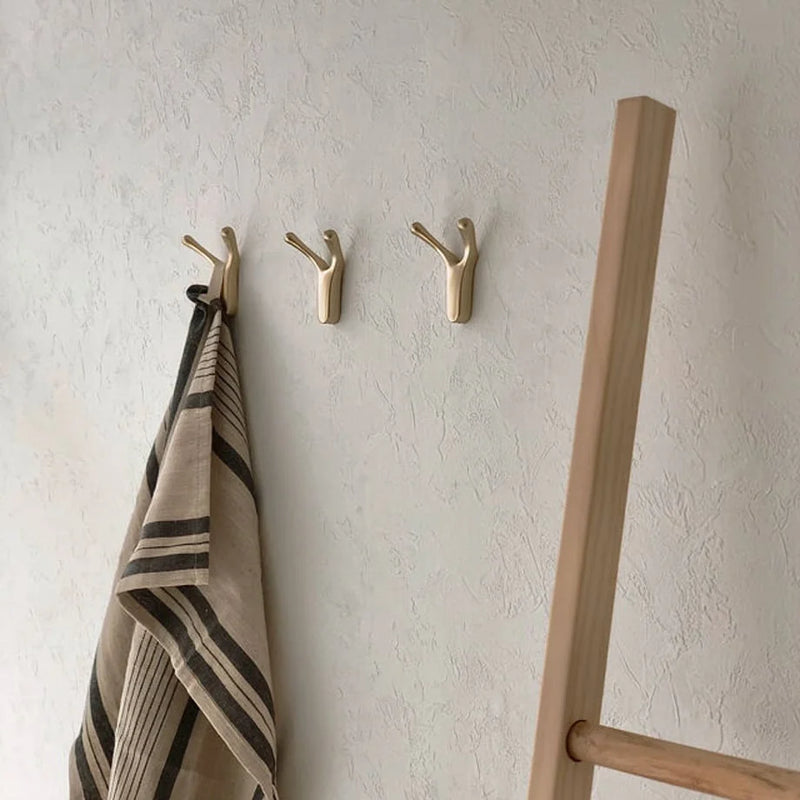
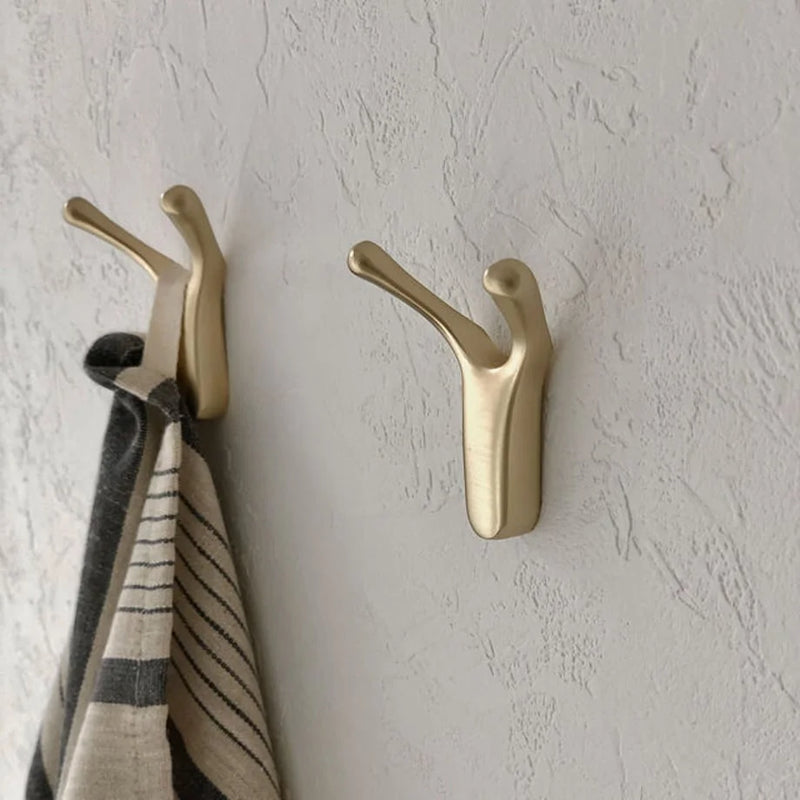
Black and grey metal read cold. Gold and brass-toned metal read warm — same material, same hardness, completely different temperature. So the highest rung on the ladder keeps every bit of the hard, hung-on-the-wall industrial honesty and just shifts the color of the steel. The room stays edgy. It stops being cold.
Wall hooks are the easiest place to make this swap, because they're metal, they're functional, and they sit at eye level where the warmth registers fast.
These hit two warming notes at once, which is why they live on rung four. The finish is gold, so the metal itself is warm. And the shape is a branch, organic and curved, the opposite of the grid from rung two. One small set of hooks does the job of two rungs. We hung a trio above a nightstand in the studio and the gold caught the warm light and pulled the whole corner up a degree the second it went on the wall.
Small Bedroom? The Ladder Still Works Vertically
A lot of you asking about industrial bedroom decor are working with a small room, and small rooms make people nervous about going hard. The worry is that heavy metal will eat the space. Fair worry. Here's the reframe.
In a small bedroom you don't climb the ladder across the floor. You climb it up the wall. Floor space is precious; vertical space is free. So the warmest, most functional industrial moves are the ones that hang.
The back of the door is the most wasted real estate in any small bedroom. Claim it.

Why this is the small-room player: it's black metal, so it sits right at rung one on temperature, but it hangs over the door and steals zero floor. The ball tips keep it from looking like a tool. It comes in black and a softer beige, so you can pick your rung: black to keep the edge, beige to climb a step toward warm without changing a single other thing in the room. In a tight space, a piece that warms the room and disappears when you close the door is doing two jobs for the price of one.

The One Mistake That Drops You Back to Rung One
I'll save you the months it took us to learn this. There's a single mistake that takes a room you've carefully climbed to rung three and yanks it straight back down to cold, and almost nobody catches it: matching everything.
The instinct is tidy. All-black hardware. All-grey metal. One finish, repeated, for a "cohesive" look. It feels right. It photographs dead. The moment every metal object in the room shares a finish, the argument disappears, and the argument was the warmth.
So mix on purpose. One grey, one gold. One hard edge, one curve. One matte, one that catches light. The room that looks slightly "unfinished" to a magazine is almost always the one that feels finished to live in. Industrial that's perfectly matched is just cold wearing a nicer outfit. For more in this language, our full Industrial Aesthetic Room Decor collection is built around pieces that argue with each other on purpose.
If you want the design thinking behind why contrast reads as comfort, the Smithsonian's notes on warmth and material perception are a good rabbit hole.
Start on Whichever Rung You're Already Standing On
You don't have to do all four rungs this weekend. That's the best part of thinking in a ladder instead of a checklist. Look at your room and ask one question: where am I already standing? If it feels cold and bare, you've got a strong rung one and you need a curve. If it's all soft and you've lost the edge, you skipped the anchor — go back down and plant one.
Climb one rung. Live with it a week. Then climb the next. Industrial bedroom decor was never supposed to be a thermostat stuck on freezing — it's a ladder, and you get to decide how warm you want the top to be.

Industrial Aesthetic Room Decor

Matte Metal Swivel Desktop Mirror
Written by the RoomDen styling desk — we style and shoot every product in our own daylight studio before it goes live, and The Thaw Ladder came out of one stubborn industrial shoot that refused to feel warm. Last updated June 2026.


