
Linen vs Cotton Bedding: Which Is Right for You?
An honest letter from our styling desk on linen, washed cotton, and fleece — what each fabric actually feels like, who it's for, and why most of our bedding shelf is washed cotton.

The honest answer to the linen vs cotton bedding question is that it depends less on which fabric is "better" and more on how you actually sleep, what your hands reach for in the dark, and what you want a made bed to feel like when you walk past it at 7pm. We can tell you which one we stock the most of and why, but the choosing is yours. This is a letter from our styling desk, not a verdict. We want the bed you end up with to feel like you, not like a spec sheet someone else filled out.
So before we open a single duvet, here is the thing most comparison posts won't say out loud: we run a bedding line, and the majority of it is washed cotton, with one linen set and two fleece sets rounding it out. That ratio isn't an accident, and it isn't us hiding linen in the back. It's the answer we arrived at after styling all of it on real beds. Below we'll walk you through how each fabric behaves, who it's actually for, and where our own shelves landed, so you can decide where you land.

Contents
The question under the question
People ask "linen or cotton?" but what they usually mean is something more specific: Will I be too hot? Will it look messy? Is it worth the price? Will I actually wash it? Those are the real forks in the road, and linen and cotton answer them differently. Linen is the loose, slubby, lived-in one. It drinks up heat, wrinkles on purpose, and gets softer for years. Cotton, especially washed cotton, is the forgiving everyday one: soft on night one, cooler than people expect, and far easier to live with if you're not the type to fuss over a bed.
Neither is wrong. But the loudest internet take, "linen is the superior natural fiber, full stop," quietly skips over the people for whom linen is genuinely the wrong call. If you run cold, hate a wrinkled top sheet, or just want bedding you can throw in the wash and forget, cotton isn't a compromise. It's the right answer. We built our shelf around that truth.
Washed cotton: why it's most of our shelf
If you only remember one thing from this letter, make it this: washed cotton is the fabric we reach for first, and it's why three of our six bedding sets are cotton. Regular cotton gets woven and sold stiff. Washed cotton is run through an extra wash-and-tumble step before it ever reaches you, which breaks down the crispness so it arrives with that soft, slightly rumpled, already-broken-in hand. You skip the "scratchy for three months until it loosens up" phase entirely.
That broken-in quality is also why it forgives you. A washed cotton duvet looks intentional whether you've smoothed it flat or left it half-thrown-back from this morning. For most people (renters, light sleepers, anyone who makes the bed in forty seconds) that forgiveness is worth more than any thread-count bragging right.
What the crinkle actually does
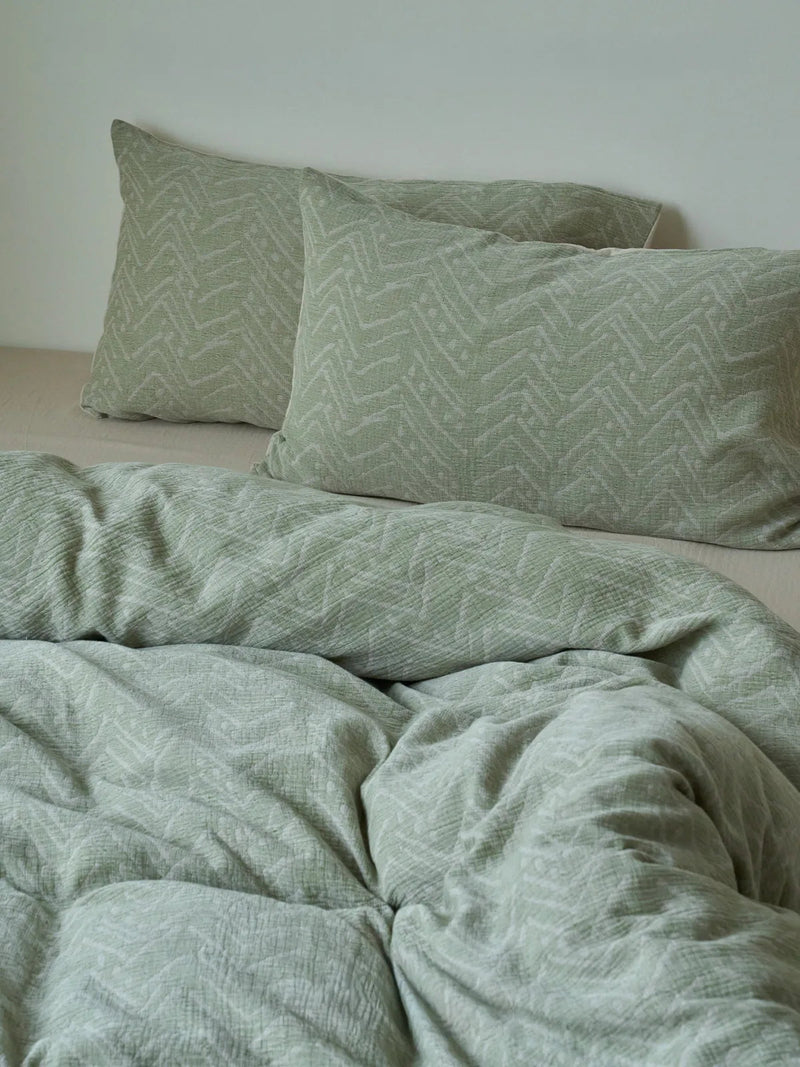
Here's a small, true thing from our own shoots. We photographed the Soft Crinkled Geometric Washed Cotton Bedding Set in sage on a low-profile bed in the morning, then came back to the same untouched bed after lunch with the blinds half-down. We didn't re-make it. We didn't need to. The crinkle holds its own shape, so the four-hour-old bed read as "styled," not "slept in." That is the entire case for washed cotton in one afternoon. Its texture does the tidying for you.
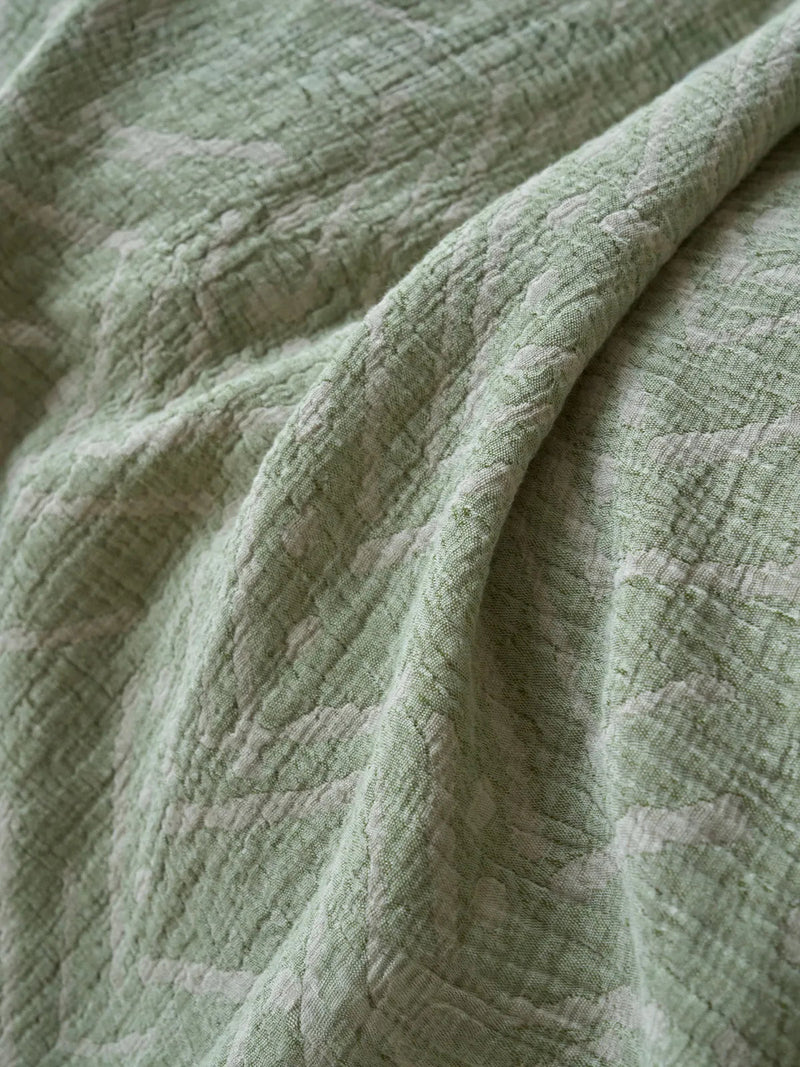
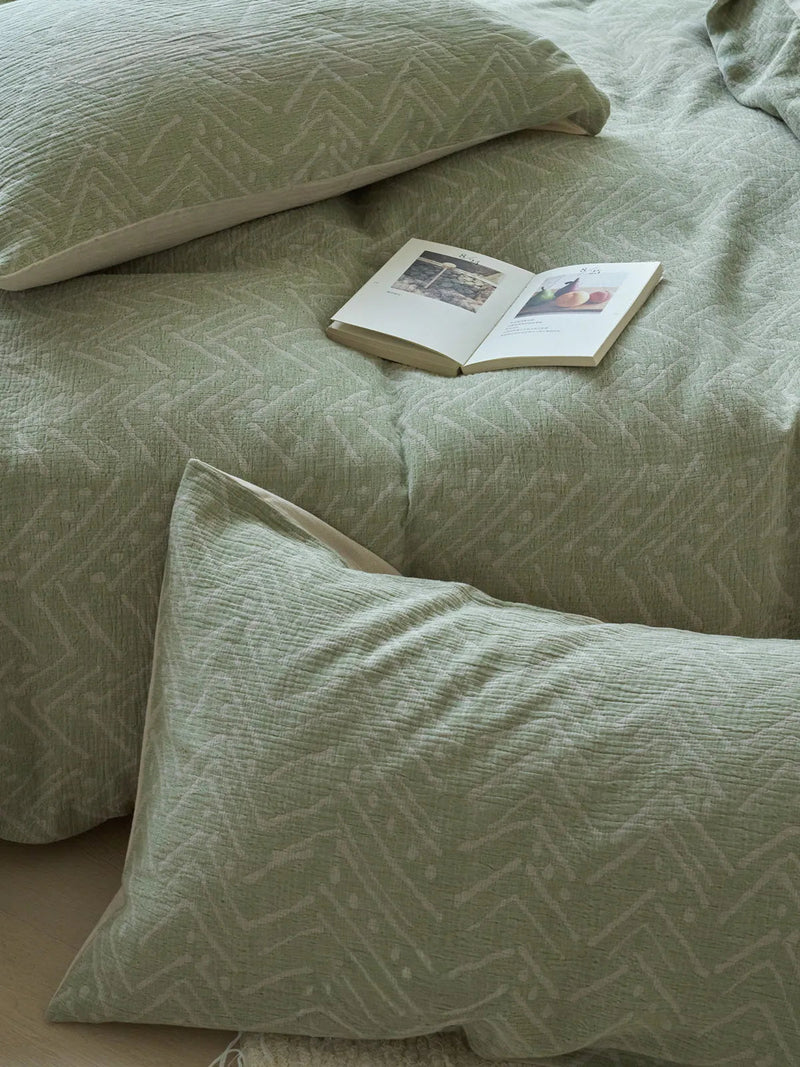
So the question this set answers is: how do I get a bed that looks calm without becoming a chore? The crinkled weave is the answer: a duvet that earns its keep on the messy mornings, not just the photographed ones. The sage runs warm-neutral, which is why it sits at the center of our cotton line rather than the edge.
Three cotton sets, three moods
Washed cotton being our base layer doesn't mean it's the boring choice. The point of leaning into one fabric is that we can give it range (quiet, graphic, or playful) without changing how it feels against your skin. Two more sets prove it.
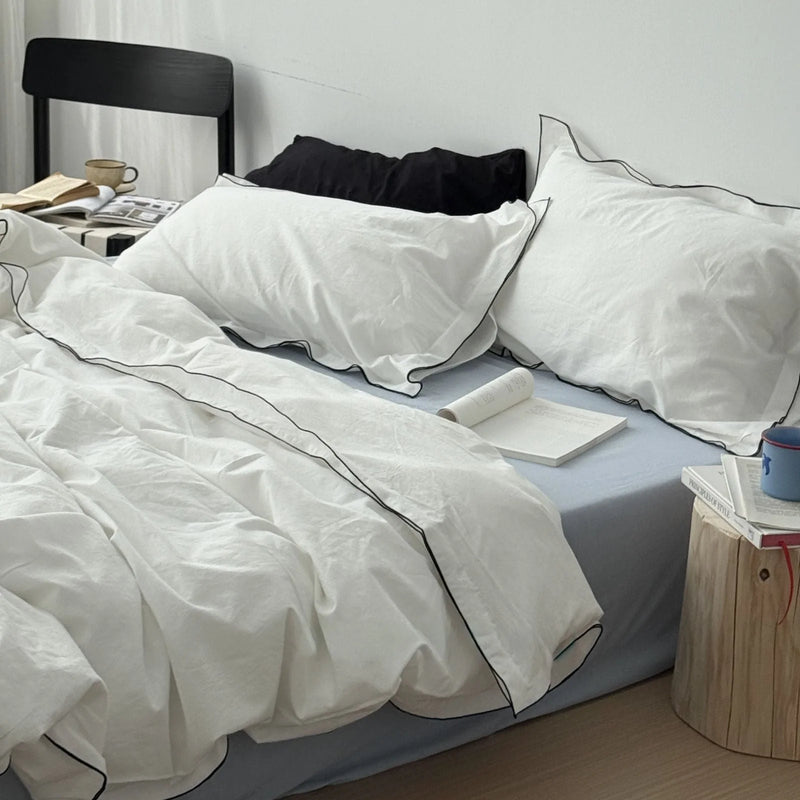
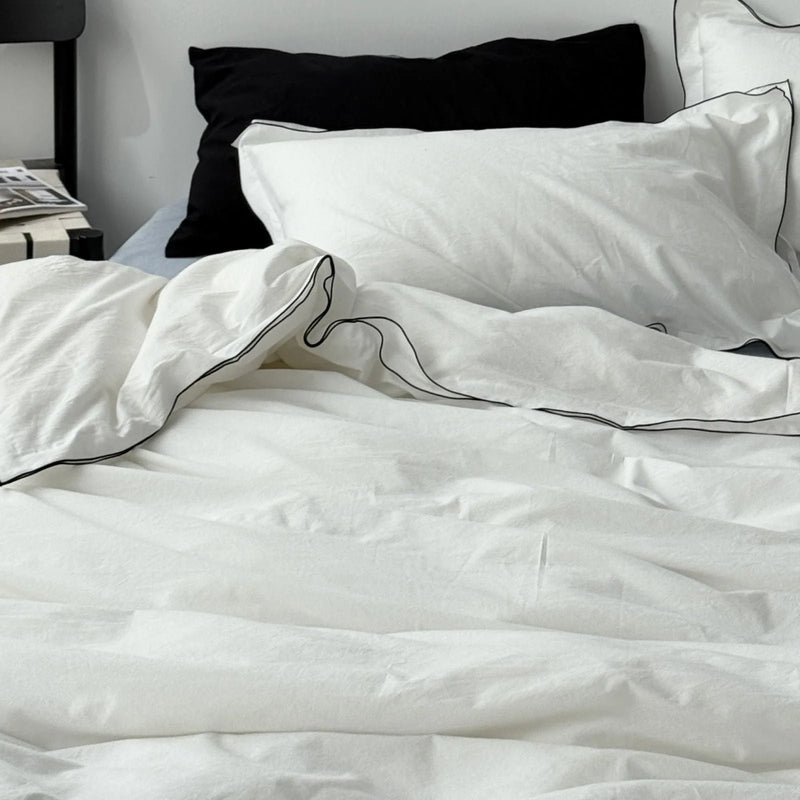
The first, for anyone who wants edges with a little intent: the Soft Contrast Trim Washed Cotton Bedding Set. White washed cotton with a fine black piped trim and ruffle, the one we'd point a Japandi-leaning reader toward. The question it answers is how do I keep an all-white bed from looking flat? The answer is one thin line of black doing all the work. At $129 it's also the most accessible door into the line.
The second is the one we put out when a room feels too serious: the Soft Polka Dot Cotton Bedding Set with Pom Poms. Same crinkled washed cotton hand, but in white with scattered colorful dots and small pink pom-poms on the pillow corners. It answers a question the comparison crowd forgets to ask, where's the room for joy? We styled it with a croissant and a stack of paperbacks and it stopped pretending to be a grown-up bedroom, in the best way. That's the freedom of a deep cotton bench: one fabric, room for the bed to actually sound like the person sleeping in it.
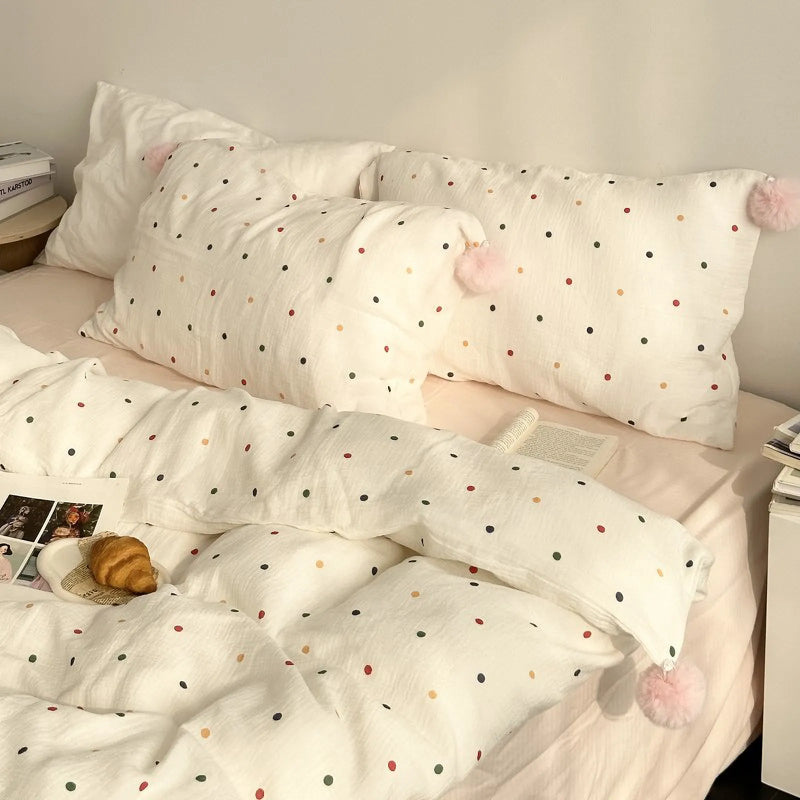
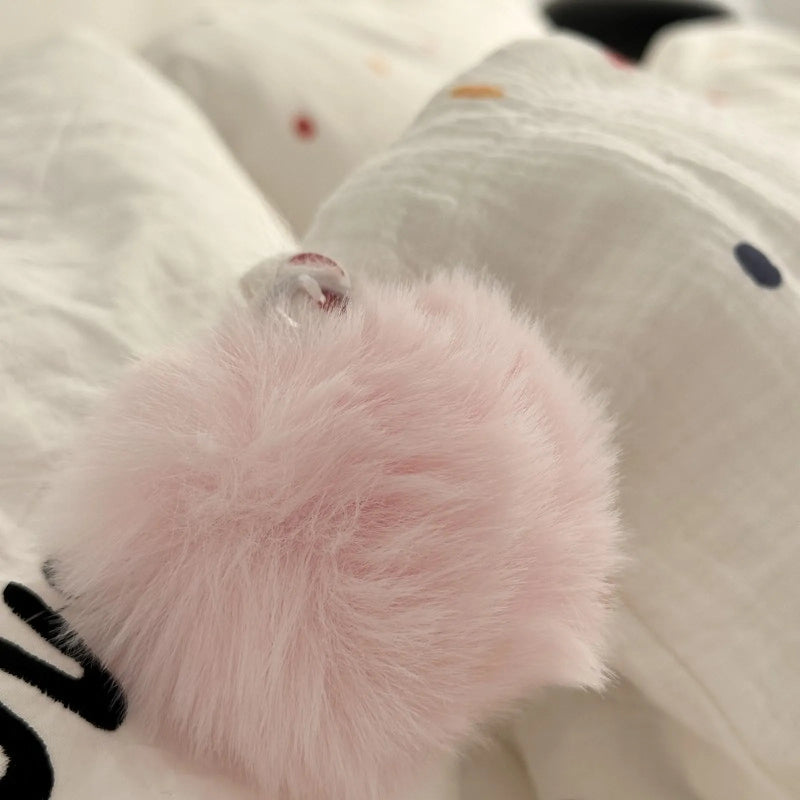
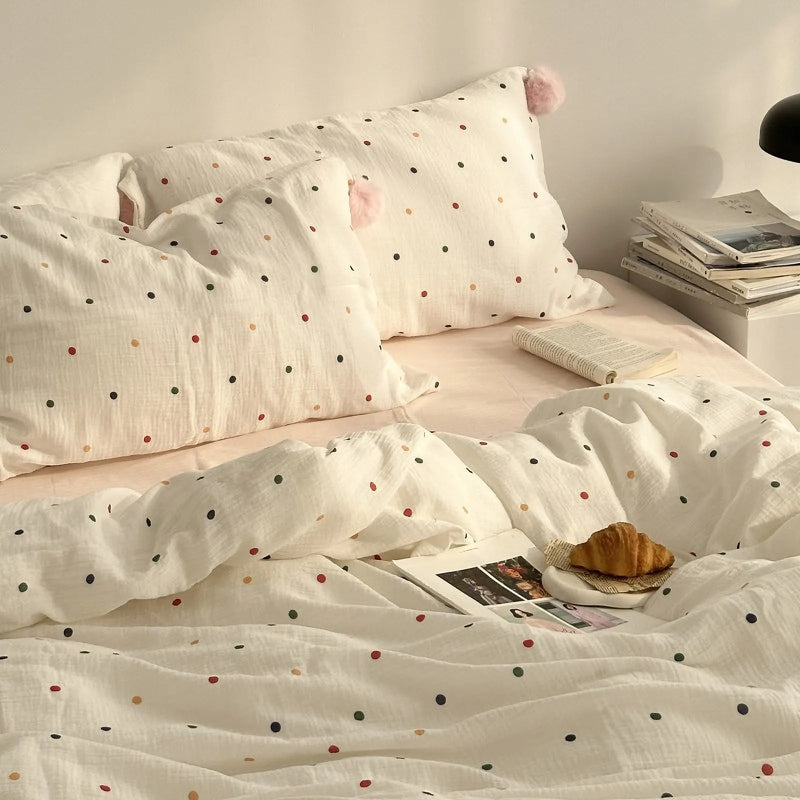

Three sets, one fabric, three completely different rooms. If you want to see them side by side, they live together in our washed cotton bedding edit. This is the part of the catalog we'd send a first-time buyer to without hesitation.
Linen: the one we keep for a reason
Now, the honest part. We stock exactly one linen set, and we're not going to pretend otherwise to win a "we love linen too" argument. Linen earns its single slot because it does something cotton can't quite match: it runs cooler in real heat, it drapes with that heavy, sculptural slump, and it ages into a softness that takes cotton longer to reach. If you're a hot sleeper, or you genuinely love the rumpled, undone look that linen wears like a uniform, this is your fabric.
The set is the Textured Blueberry Embroidered Linen Bedding Set: cream linen with small blueberry embroidery, a dark piped edge, and ruffled pillowcases. We kept this one specifically because it answers the question how do I get the linen look without it reading as plain? The embroidery gives the slubby linen ground a focal point, so the wrinkle reads as "considered," not "I forgot to iron." In our own daylight shoot the linen pillowcases held their soft collapse against the headboard while the cotton sets nearby sprang back, a tiny side-by-side that told us exactly who each fabric is for.
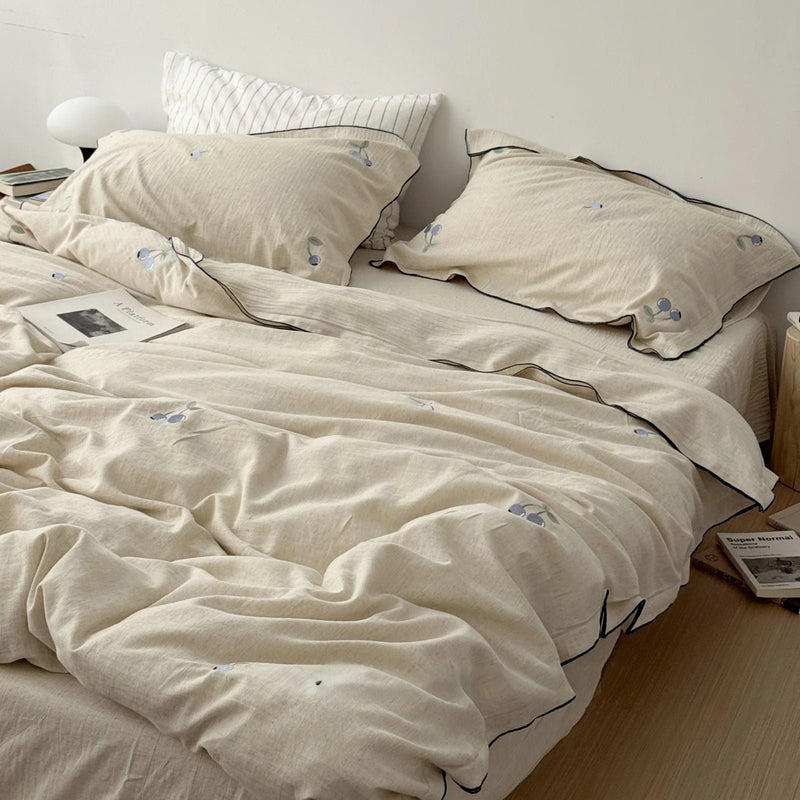

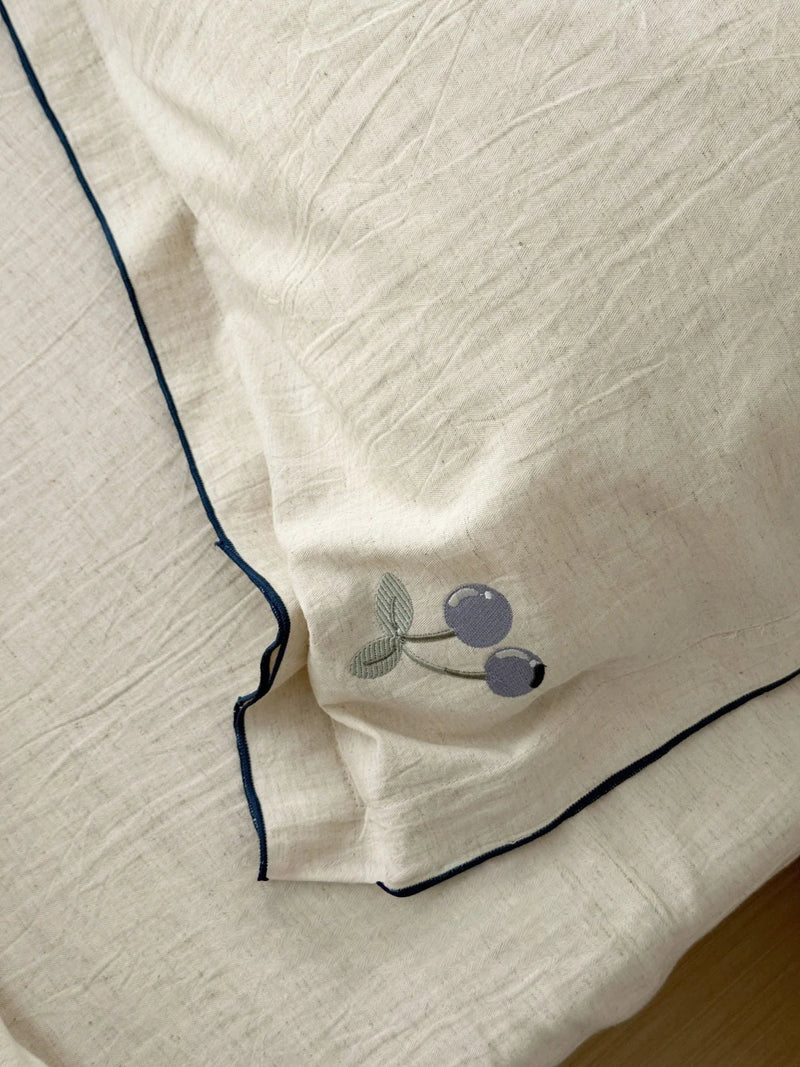
The downside is the one linen always carries, and we'd rather you hear it from us: it wrinkles, permanently and on purpose. If a smooth, pressed bed is what makes you feel settled, linen will quietly stress you out every morning. That's not a flaw in the fabric. It's a mismatch with the sleeper. Knowing that mismatch up front is the whole point of this letter.
Fleece: the cold-floor exception
There's a third honest answer the linen-vs-cotton debate ignores entirely, and it's the one we hear most from readers in cold apartments: I don't want cool or breathable. I want warm. For them, neither natural fiber is the move. Fleece is. We keep two flannel fleece sets for exactly the months when a breathable weave feels like a punishment, and they outsell everything in deep winter.
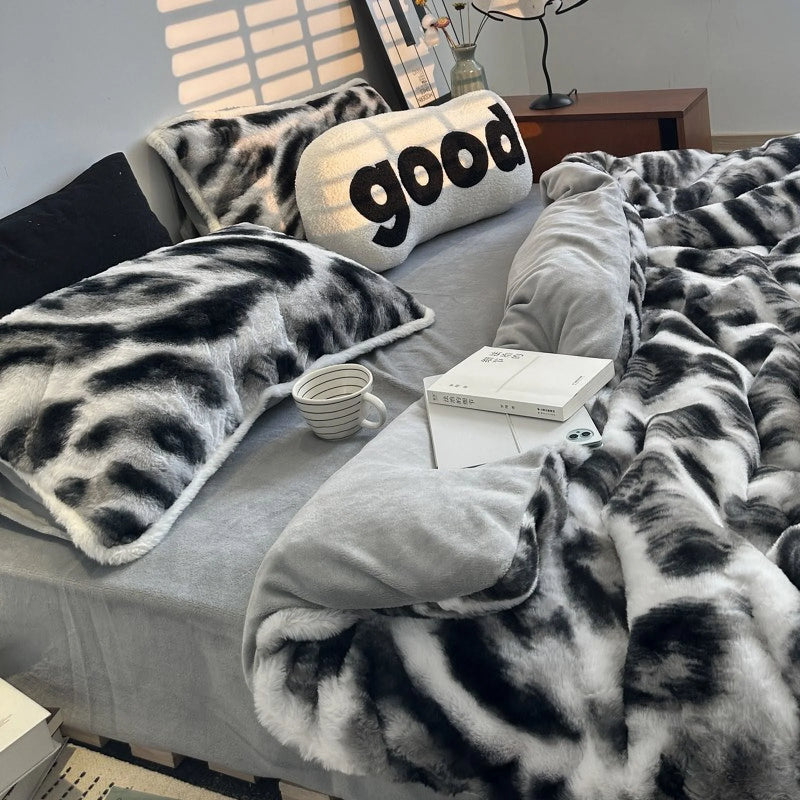
The softer-spoken of the two is the Plush Ruched Fleece Bedding Set, a ruched, wavy-textured flannel that comes in blush pink and dusty lavender. It answers how do I make a cold room feel like a hug? The bolder one is the Plush Abstract Animal Print Fleece Bedding Set in a black-and-white abstract print: same plush hand, more attitude, for the reader who wants their warm bed to have an opinion. We styled both with a laptop and books because that's honestly how they get used: as the bed you don't want to leave.
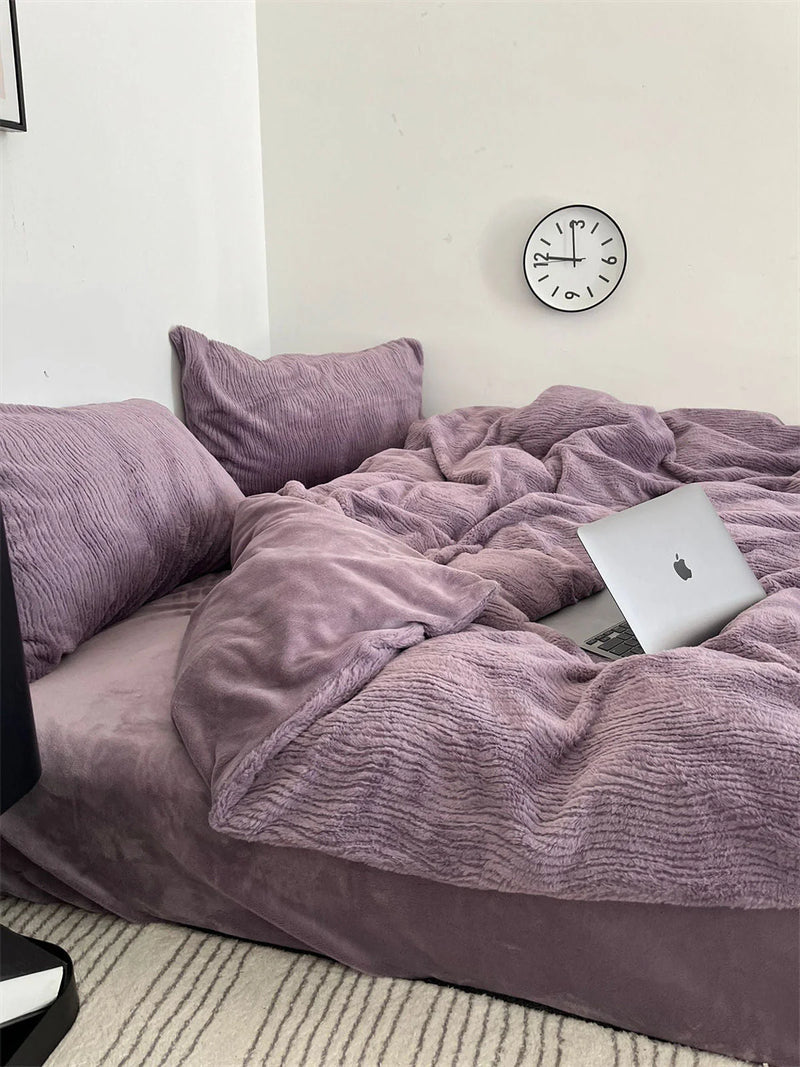

Plush Ruched Fleece Bedding Set

Plush Abstract Animal Print Fleece Bedding Set
A short, honest comparison
If you skimmed to here, that's allowed. The fastest way to read the linen vs cotton bedding choice, with fleece as the honest third option, is by the question that's actually keeping you up:
Temperature. Hot sleeper? Linen runs coolest. Year-round neutral? Washed cotton. Always cold? Fleece, no contest. Upkeep. Washed cotton is the most forgiving: soft on night one, looks fine un-smoothed, washes easily. Linen asks you to accept wrinkles forever. Fleece is cozy but warmer to launder in volume. The look. Linen drapes heavy and undone; washed cotton sits softly rumpled and reads "calm"; fleece reads "burrow." Day-one feel. Washed cotton and fleece are soft immediately; linen softens beautifully but takes time to get there.
You'll notice we didn't crown a winner. That's deliberate. The right fabric is the one that matches how you sleep, and a made bed should feel like you settling in, not like you passing someone else's comfort test. For most readers that lands on washed cotton, which is exactly why it's most of what we make.
How to pick by how you sleep
Start with the one question that decides the rest: what do you want the bed to do for you? If you want easy, soft, forgiving, and good in any season, begin with washed cotton. It's our main line for a reason, and it's where we'd send almost everyone first. If you run hot and love the undone look, the linen set is waiting for you. If your feet are cold right now just reading this, go straight to fleece.
Whatever you choose, choose the touch first. The pattern, the color, the trim are how the bed becomes yours, and they come after the fabric that's actually right for your nights. When the touch is right, the room finally feels like the person sleeping in it.
Written by Mara Lindqvist, Senior Styling Editor at RoomDen — we style and photograph every bedding set in our own daylight studio before it ships, on real beds, on real messy mornings. Last updated June 2026.


