
Wabi-Sabi Decor: Finding Beauty in the Imperfect (2026)
A wabi-sabi catalog grouped by the kind of imperfection each piece carries — wandering rims, honest textures, soft plaster glow — plus our notes on why we chose to keep each flaw.

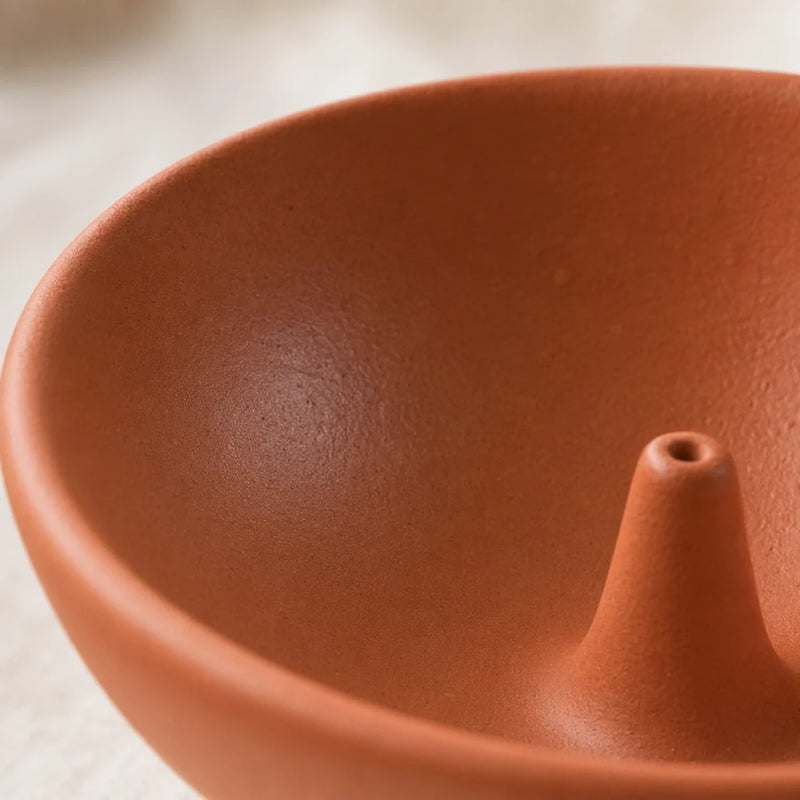
Good wabi sabi decor starts with a decision most shops never show you: which flaws to keep. Last winter, on our sourcing desk, we had four samples of the same little ceramic burner lined up under a warm lamp, and we spent the better part of an afternoon arguing over a single thumb-dent near the rim. Three of us wanted it gone. One of us was right that it should stay. That dent is the reason the Wabi-Sabi Ceramic Stick Incense Holder is in our catalog today, and the reason this whole piece exists.
Wabi-sabi is the Japanese sensibility of finding beauty in the imperfect, the impermanent, the unfinished. In a room, it reads as warmth: uneven glaze, a rim that wobbles, a surface that catches light unevenly instead of bouncing it back like glass. The hard part is that "imperfect" can mean made with care or it can just mean made badly, and from a product photo you cannot always tell which. So we built a rough internal test for it. We call it the Three-Question Pass, and everything below is organized around the three questions it asks.
Contents

The Three-Question Pass: how we choose wabi-sabi ceramics
The Three-Question Pass is not a spec sheet. It is the short run of questions we ask before a wabi-sabi piece earns a place on the site, and it exists because the easy version of this aesthetic is fake: machine-pressed "irregularity," a dent stamped into every unit in exactly the same spot. That is not imperfection. That is imperfection cosplay.
So we ask three things. First, made not molded: does the mark come from the making (a glaze pooling where it ran, a rim shaped by hand) rather than from a mold pretending to be a hand? Second, does the flaw change how the piece holds light or how it feels in the palm, or is it purely cosmetic noise? Third, would the mark still feel like a quiet gift six months in, or would it start reading as a defect you have to explain to guests? Anything that answers yes to all three clears the pass. Most samples we see do not.
What follows is our actual catalog, grouped not by price or by room but by the kind of imperfection each piece carries. We find this is how people actually shop for wabi-sabi once they catch the bug: not "I need a bowl," but "I want the thing with the honest surface." Browse the full set anytime in our Wabi-Sabi Aesthetic Room Decor collection; the groupings below are how we'd walk you through it in person.
Flaws that breathe: asymmetry on purpose
The first family the pass lets through is asymmetry. A perfect circle is calm but a little dead; a rim that rises and dips gives a piece a heartbeat. The trick is that the asymmetry has to look found, not designed. When it looks designed, you get that uncanny "distressed" furniture feeling, where every scuff is suspiciously charming.
The wavy rim that took three rounds
How do you put movement on a flat table without adding clutter? We went looking for a fruit bowl that earns its keep empty, and it took us three sample rounds to get there. The first wavy rim was too uniform, like a piecrust crimped by machine. The version we kept has a lip that genuinely wanders, higher on one side, and a pedestal that lifts the whole thing into a small ceremony. The drainage base was the practical clincher: lemons and stone fruit actually last on it.

Why it works: the irregular rim does the styling for you. Sit it empty on a console and the shadow line alone reads as intentional; fill it and the fruit becomes the color. That is the whole wabi-sabi move in one object, beauty that does not need to be busy to be felt.


Honest surfaces: texture you can read with your eyes shut
The second family is surface. A truly wabi-sabi piece tells you it was touched. Run a thumb across it and you feel the throwing rings, the grit, the place where glaze went thin over a high point. We test this literally: at our styling desk we close our eyes and hold the sample, and if it feels like a phone screen, it goes back.
A geometric cup that admits it was made by hand
What do you reach for on a slow morning when you want the cup itself to feel like part of the ritual? We kept the Textured Geometric Ceramic Coffee Cup & Saucer Set because the saucer has a deliberate cracked-earth pattern and the cup carries a faceted, faintly gritty wall. In the Sandstone Beige especially, the glaze sits a shade lighter on the raised facets, so a single cup reads as several quiet tones at once.
Why it works: the facets catch low morning light and break it into small planes, so the cup looks different at 7am than at noon. At $39 it is also the easiest entry point in this whole list, the piece we point first-timers toward.


The gradient mug we almost rejected
Here is an honest one. The Matte Gradient Ceramic Mug Set with Wooden Handle nearly failed the pass, because gradient color can tip into "trendy" fast, the opposite of wabi-sabi's patience. What saved it was the matte body and the small spherical wooden handle: no two handles take the finish quite the same way, and the matte glaze means the color fades into the clay instead of sitting on top like paint. We pour-tested it for a week before saying yes.

Why it works: the wood-and-clay pairing keeps the gradient grounded in natural material, so it stays warm rather than novelty. It is the piece that proves wabi-sabi is a sensibility, not a color palette, you can apply it even to something as cheerful as a mug.
Soft light: the flaw you feel instead of see
Not every imperfection is something your hand can find. The third family is about light, and this is where wabi-sabi quietly does its best work, because soft, uneven, slightly-too-dim light forgives a whole room. We test these the same way every time: lamp off the overheads, single warm source, and we watch what the object does to the dark around it.
The Sunlit Glacier Mountain Aroma Lamp earned its place because the plaster body has a chalky, matte irregularity that makes the glow look like it is coming from inside a stone rather than from a bulb. It is part night light, part diffuser, and the unfinished plaster surface is the entire point, a polished version would have looked like a gadget.

Why it works: matte plaster scatters light instead of reflecting it, so the glow has soft edges that flatter every surface near it. Pair it with the incense holder from the top of this piece and you get a corner that smells, glows, and goes quiet all at once.
That little burner deserves its own moment, since it started this whole essay. The Wabi-Sabi Ceramic Stick Incense Holder is the thumb-dent piece, the one we kept the imperfection on. It is a mini burner bowl that catches ash and reads as a small, deliberate object on a shelf even when it is not in use. At $22 it is the lowest-commitment way to bring a wabi-sabi gesture into a room.

Why it works: small, tactile, and unbothered about being perfect, it is wabi-sabi in miniature. The kept dent is exactly where your thumb lands when you set it down, which is the kind of accident you only notice after you have lived with it a while.

Imperfection you can wear
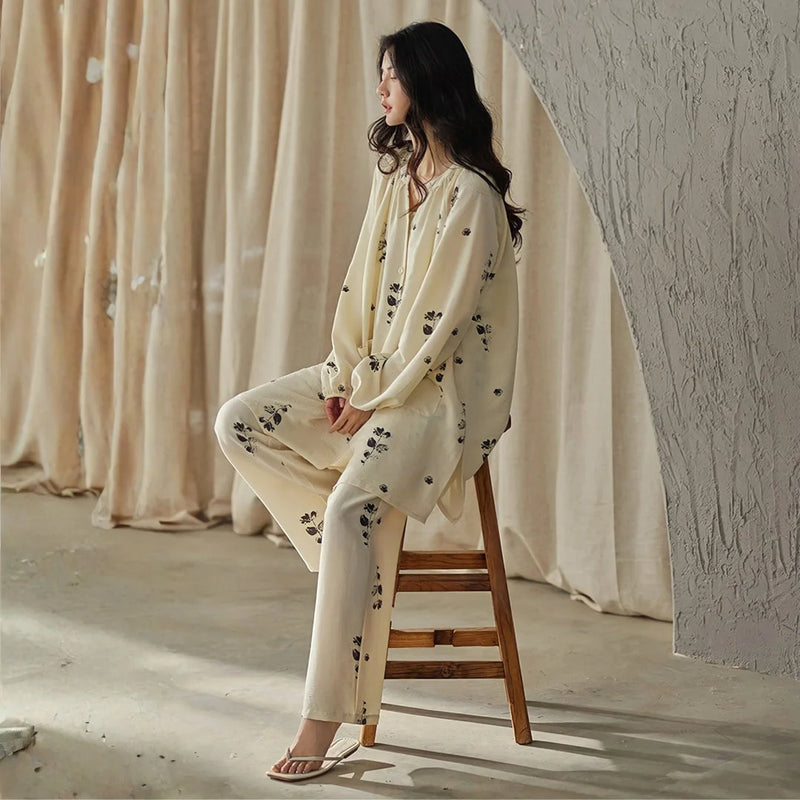
One last category, because wabi-sabi is not only ceramic. The mood works on the body too, and the question we get asked is whether a single soft piece can carry the feeling into a bedroom. It can. The Lightweight Textured Botanical Print Cotton Pajama Set cleared the pass on its slightly irregular slubbed cotton and an oversized, unfussy cut that is meant to crease, drape, and look better lived-in than fresh from the box.

Why it works: the textured cotton and creamy beige echo the unglazed clay in the rest of this list, so the aesthetic carries from your shelf to your skin. Slubs and soft wrinkles here are features, not flaws, the same forgiveness the plaster lamp gives a room.


Let the room agree with one honest thing
You do not adopt wabi-sabi by redecorating. You adopt it by keeping one honest object where you will see it every day, then letting the rest of the room slowly come around to it. The whole three-question habit started with a single kept dent, and most of our customers begin with a single piece too, usually the incense holder or the geometric cup, because both are small, cheap, and quietly insistent. Live with one honest surface long enough and it sets the bar; the next thing you bring home has to answer to it.
Pick the family that pulls you: the breathing asymmetry of the bowl, the honest surface of the cup, or the soft glow of the lamp. When you are ready for the next piece, the full Wabi-Sabi Aesthetic Room Decor collection is grouped the way we just walked it.

Textured Geometric Ceramic Coffee Cup & Saucer Set

Wabi-Sabi Ceramic Stick Incense Holder – Mini Burner Bowl
Written by the RoomDen styling desk — we style and pressure-test every product in our own warm-light studio before it ships, and we keep notes like the ones above on what we chose to keep and why. Last updated June 2026.
For the history behind the sensibility, the Wikipedia entry on wabi-sabi is a solid, non-commercial primer on where the philosophy comes from.


